

Abstract
Bangladesh’s fisheries sector, central to national nutrition, food security, and rural livelihoods, is increasingly threatened by the convergence of zoonotic pathogens, antimicrobial resistance (AMR), and environmental degradation. Using a One Health framework, this review synthesizes evidence from 87 peer-reviewed articles, institutional reports, and regional studies to demonstrate how interactions among aquatic ecosystems, farmed and wild fish populations, and human communities drive the emergence and transmission of disease. Zoonotic parasites including trematodes, cestodes, nematodes, and protozoa persist through contaminated water, inadequate market hygiene, and exposure to domestic and wild animals. Aquaculture systems are further burdened by zoonotic bacteria (e.g., Vibrio spp., Aeromonas spp., and Mycobacterium spp.) and microsporidian parasites (e.g., Enterocytozoon spp.), together posing significant occupational and foodborne risks. Emerging fungal pathogens, notably Saprolegnia spp. and Aphanomyces invadans, intensify disease burdens under poor farm management and environmentally stressed conditions. Critical contamination pathways, industrial and agricultural runoff, cross-contamination in fish markets, unregulated chemical use, and weak biosecurity link aquatic pollution with human and animal health outcomes. The introduction of non-native fish species (e.g., tilapia, pangas, carp) and the expanding ornamental fish trade further amplify pathogen risks, facilitating the silent spread of bacterial, parasitic, and fungal agents with zoonotic potential. Climate change, biodiversity loss, and socioeconomic vulnerabilities exacerbate these pressures by destabilizing aquatic ecosystems, reducing resilience, and accelerating AMR dissemination across aquatic, human, and livestock interfaces. By integrating insights from parasitology, microbiology, epidemiology, and environmental science, this review underscores the urgent need for coordinated surveillance, diagnostic capacity, regulatory enforcement, and risk communication strategies. Embedding One Health and climate-smart approaches into fisheries governance is essential to mitigate zoonotic hazards, safeguard food safety, and ensure the long-term sustainability of Bangladesh’s aquaculture sector under accelerating environmental change.
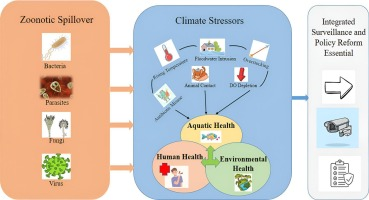
Graphical abstract
Keywords
Aquaculture biosecurity; Zoonotic pathogens; Antimicrobial resistance; Climate-smart fisheries; One Health framework; Bangladesh
1. Introduction
Bangladesh is often described as a land of rivers, and its floodplains and wetlands make it one of the most fish-rich countries in the world. Fish are deeply tied to the nation’s food culture, and they provide more than 60% of the animal protein consumed by the population (DoF, 2023). Beyond nutrition, fisheries are a cornerstone of rural livelihoods, offering employment, income, and food security to millions of households. According to the Department of Fisheries, the sector contributes about 3.5% to national GDP and nearly 25% to agricultural GDP, while employing more than 12% of the country’s labor force (DoF, 2023). Shrimp and prawn farming along the coast also generate significant foreign exchange earnings, positioning fisheries as one of the pillars of Bangladesh’s rural economy and global trade (Shamsuzzaman et al., 2022).
The rapid growth of aquaculture has transformed Bangladesh into one of the leading fish- producing nations. Farmers now cultivate carp, tilapia, pangasius, prawns, and shrimp in ponds, cages, and coastal enclosures. This expansion has reduced poverty and improved food availability, but it has also introduced new vulnerabilities. Fish farms frequently face outbreaks of bacterial diseases such as Aeromonas hydrophila and Vibrio spp., fungal infections like saprolegniosis, and viral diseases including white spot syndrome virus (Lindholm-Lehto and Pylkkö, 2024; Mahmud et al., 2025; Qadir et al., 2024). These diseases can cause mass mortalities, reduce productivity, and threaten farmer livelihoods. Shrimp aquaculture, in particular, has suffered repeated losses due to viral epidemics, undermining export potential and farmer confidence (Raja et al., 2025).
The One Health concept emphasizes that human, animal, and environmental health are interconnected (FAO, UNEP, WHO, WOAH, 2022; Elgendy et al., 2022). In Bangladesh, this linkage is evident. Farmers and consumers may be exposed to fish-borne pathogens such as Mycobacterium marinum and Streptococcus agalactiae (Al Sulivany et al., 2024). At the same time, the widespread use of antibiotics in aquaculture has led to the emergence of resistant bacteria, including strains of Aeromonas and Vibrio, which pose risks to both aquatic species and public health (Khan et al., 2024). Antimicrobial resistance (AMR) is now recognized as a global crisis, and Bangladesh’s aquaculture sector is a critical front in this battle (Khan et al., 2023).
Environmental pressures further complicate the picture. Pollution from agriculture and industry, poor water quality, and climate change increase the risk of disease outbreaks. Rising temperatures and irregular rainfall affect fish breeding cycles, while salinity intrusion in coastal areas threatens shrimp farming. These challenges are compounded by socio-economic realities: smallholder farmers often lack access to veterinary services, diagnostic facilities, and training in biosecurity. Policy frameworks remain fragmented, with limited coordination between fisheries, health, and environmental agencies (Shamsuzzaman et al., 2022).
Bangladesh’s fisheries are not only a national priority but also part of a global conversation about sustainable food systems. As the world looks for ways to feed a growing population while protecting ecosystems, Bangladesh’s experience offers lessons in both opportunity and risk. The country’s success in scaling aquaculture demonstrates the potential of fisheries to drive nutrition and economic growth, but its struggles with disease, AMR, and environmental stress highlight the urgent need for integrated solutions.
To address these challenges, Bangladesh needs a comprehensive One Health approach that brings together fisheries science, public health, and environmental management. This review synthesizes evidence on fish and shrimp health in Bangladesh, focusing on bacterial, fungal, and viral diseases, antibiotic resistance, food safety risks, and environmental pressures. It highlights why integrated action is essential to protect aquaculture, safeguard human health, and ensure sustainable development, while also positioning Bangladesh as a model for One Health in fisheries worldwide.
The purpose of this review is to synthesize current knowledge on fish and fisheries in Bangladesh within the framework of the One Health concept. Aquaculture in the country faces multiple health challenges, including bacterial, fungal, and viral diseases that threaten productivity and food security. At the same time, the growing problem of antibiotic resistance in aquaculture has significant implications for public health, raising concerns about the transfer of resistant pathogens through the food chain. Environmental pressures such as pollution, climate change, and poor water quality further compromise fish health and the sustainability of farming systems. In addition, socio-economic and policy gaps continue to limit effective disease management and food safety practices in the fisheries sector. By addressing these major concerns, the review seeks to provide an integrated synthesis of how fish and fisheries in Bangladesh are linked to human and environmental health, and to suggest directions for future research, policy, and practice.
2. Material and methods
2.1. Study design and framework
This study employed a structured systematic and integrative review approach to synthesize evidence on zoonotic pathogens, AMR, and environmental health risks in Bangladesh’s fisheries and aquaculture systems under a One Health framework. The methodology was designed following PRISMA (Preferred Reporting Items for Systematic Reviews and Meta-Analyses) guidelines to enhance transparency, reproducibility, and rigor. The review covered peer-reviewed articles, institutional reports, and regional studies published between 1999 and 2025.
2.2. Literature retrieval and search strategy
A comprehensive literature search was conducted in PubMed, Scopus, Web of Science, ScienceDirect, and Google Scholar. All databases were searched from July 7, 2025 and September 24, 2025, and the final search was executed in October 2025; records published between January 1999 and December 2025 were eligible for inclusion. Search strings combined controlled vocabulary and free-text terms with the Boolean operators AND and OR, adapted to the syntax and field tags of each database, and were limited to English-language, full-text records. The core concepts were combined as: (zoonotic OR zoonoses OR “fish-borne” OR foodborne) AND (fish OR shrimp OR shellfish OR aquaculture OR fisheries) AND (bacteria OR parasite* OR helminth OR trematode OR fungal OR virus OR “antimicrobial resistance” OR AMR OR “One Health”) AND (Bangladesh OR “South Asia” OR tropical). The complete, database-specific search strings, applied filters, the date each was run, and the number of records retrieved are provided in Supplementary Table S1. In Google Scholar, where Boolean functionality is limited, the first 200 relevance-ranked results were screened for each thematic query. Grey literature was restricted to reports issued by recognized national and international authorities (FAO, WHO, WOAH, UNEP, the Department of Fisheries, and WorldFish) and was appraised using the AACODS checklist (Authority, Accuracy, Coverage, Objectivity, Date, Significance); only sources meeting all six criteria were retained (Supplementary Table S2).
All retrieved records were imported into [Mendeley Reference Manager]. Duplicate records were first removed automatically by matching on title, first author, publication year, and DOI, and the remaining set was then checked manually to catch duplicates missed by automated matching, such as variant author spellings or preprint journal pairs. A total of 624 duplicate records were removed before screening, as documented in the PRISMA flow diagram (Fig. 1).

2.3. Selection and eligibility criteria
The study selection process followed a PRISMA-based workflow consisting of identification, screening, eligibility, and inclusion phases.
Studies were included if they met the following criteria:
- •Reported zoonotic pathogens (bacterial, viral, parasitic, or fungal) associated with fish, shellfish, or aquaculture environments
- •Had direct or contextual relevance to Bangladesh or comparable tropical aquaculture systems
- •Addressed AMR, environmental contamination, or public health implications
- •Were published in English with full-text availability
Exclusion criteria included:
- •Non-peer-reviewed articles without sufficient methodological details
- •Studies unrelated to zoonotic transmission or aquaculture systems
- •Purely marine ecological studies without relevance to freshwater or aquaculture contexts
- •Duplicate publications or overlapping datasets
A total of 87 studies were finally included after full-text assessment, following removal of duplicates and irrelevant records.
2.4. Data extraction and synthesis
Each selected study was systematically reviewed and categorized based on pathogen type (parasitic, bacterial, fungal, and viral), host species, transmission pathways, and associated public health risks. Thematic domains were identified to facilitate integrative analysis, including: (i) zoonotic parasite-host dynamics; (ii) bacterial and fungal prevalence in aquaculture systems; (iii) environmental and occupational exposure routes; (iv) market hygiene and biosecurity practices; (v) climate change and ecological stressors; and (vi) surveillance frameworks and policy gaps. Data were synthesized into structured tables and narrative summaries to highlight pathogen profiles, host interactions, and for aquatic animal, human, and environmental health implications across Bangladesh’s fisheries landscape.
For environmental risk mapping, pollution hotspots were identified from the reviewed literature and visualized using a qualitative heatmap approach (Fig. 7). Each location was assigned a relative pollution-intensity score (0.4–0.9) using a transparent, semi-quantitative scoring framework based on three criteria: (i) frequency, defined as the number of independent studies reporting pollution at or near the site; (ii) severity on the reported magnitude and toxicity of contamination; and (iii) consistency on the degree of agreement among studies. Sites were placed into three bands: a low-moderate band (0.4–0.5) where pollution was dominated by a single, diffuse source such as agricultural chemicals reported in relatively few studies of lower severity; a moderate-high band (0.6–0.7) where one or two well-characterized source types (e.g., urban wastewater, agricultural runoff, or aquaculture-related inputs) were documented across several studies; and a high band (0.8–0.9) where multiple co-occurring industrial and urban sources (e.g., textile dyeing, tannery and industrial effluents, or port and ship-breaking activities) were consistently reported at high severity across numerous studies. Two authors assigned scores independently and reconciled differences by consensus. These values are relative, literature-derived indices used solely for comparative spatial visualization and do not represent measured pollutant concentrations or quantitative geospatial analyses. The criteria supporting each location-specific score are provided in Supplementary Table S6, and the limitations of this semi-quantitative approach are discussed in the Limitations section.
2.5. Quality assessment
The methodological quality of each included study was appraised using a structured approach matched to the range of study designs in the review. Quantitative observational studies (prevalence, detection, and surveillance reports) were evaluated for clarity of design, adequacy and representativeness of sampling, use of laboratory-confirmed or molecular diagnostic methods, and geographic relevance to Bangladesh or comparable tropical aquaculture systems. Mixed-methods and qualitative sources were appraised using the corresponding domains of the Mixed Methods Appraisal Tool (Hong et al., 2018). Each study was rated independently by two authors across these domains and assigned an overall grade of high, moderate, or low quality, with disagreements resolved by discussion. Studies graded low were retained only where they supplied context-specific evidence unavailable elsewhere, and their limited rigor was weighed accordingly in the synthesis. Priority in the narrative and comparative analysis was given to field-based, laboratory-confirmed, and nationally or internationally recognized surveillance studies. The per-study quality ratings are provided in Supplementary Table S2.
2.6. PRISMA flow and reproducibility
A PRISMA flow diagram was developed to document the study selection process, including numbers of records identified, screened, excluded, and included (Fig. 1). The use of a structured search strategy, predefined eligibility criteria, and standardized data extraction procedures enhances the reproducibility and transparency of the review methodology.
2.7. Comparative risk prioritization
To provide a transparent and reproducible comparison of fishery-associated zoonotic hazards, major pathogen groups (bacteria, trematodes/cestodes, protozoa, fungi, microsporidia, and viruses) were evaluated using a five-dimensional (each on a three-point scale) semi-quantitative framework. The dimensions were clinical severity of the associated human disease (1 = mild or self-limiting, 2 = moderate or treatable, 3 = severe, chronic, or carcinogenic); occurrence in Bangladeshi fish or aquaculture systems (1 = isolated reports, 2 = multiple studies or moderate prevalence, 3 = widespread or high prevalence); transmission potential judged by the number of established exposure pathways (1 = one route, 2 = two routes, 3 = three or more); environmental persistence and antimicrobial-resistance amplification capacity (1 = low, 2 = moderate, 3 = high); and the strength of evidence linking exposure to human disease in Bangladesh (1 = biologically plausible only; 2 = indirect or reservoir-based evidence; 3 = directly documented human cases). The five scores were summed to a composite value (5-15), and each group was placed into a priority tier. These includes high (12-15), moderate (9-11), or low/emerging (5-8). Two authors scored every group independently using these anchors and reconciled differences by consensus. Because burden-of-disease data are unavailable for most fishery-associated zoonoses in Bangladesh, the framework relies on documented occurrence, transmission potential, disease severity, and evidence quality. The full matrix and tiers are presented in Supplementary Table S4 and visualized in Fig. 9. Justification of each dimension score, with supporting evidence from the reviewed studies are provided in Supplementary Table S5.
2.8. Ethical considerations
This review is based exclusively on publicly available literature and did not involve human or animal subjects. Ethical standards were upheld by adhering to proper citation protocols and ensuring transparency in data interpretation and reporting.
3. Public health and nutrition
Aquaculture has become indispensable to Bangladesh’s food system, providing more than 60% of animal protein and serving as the primary source of affordable protein for millions (Table 1). However, alongside its nutritional contributions, the rapid intensification of aquaculture has introduced a range of public health concerns. These include chemical contaminants, antimicrobial residues, microbial pathogens, declining nutritional quality, and limited consumer awareness regarding seafood safety. From an aquatic animal, human, and environmental health perspective, these challenges arise from interactions among aquatic environments, farm management practices, aquatic organisms, and human populations. The principal public health and nutritional risks associated with fish and fisheries in Bangladesh are summarized in Table 1.
Table 1. Public health and nutritional risks from fish & fisheries in Bangladesh.
| Concern | Contaminants or Hazards | Affected Aquatic Species | Human Health Risks | One Health Implications | Bangladesh Context | Reference |
|---|---|---|---|---|---|---|
| Heavy Metal Contamination | Mercury (Hg), Cadmium (Cd), Arsenic (As), Lead (Pb) | Predatory fish, shrimp, shellfish | Neurotoxicity, kidney damage, developmental disorders, cardiovascular issues | Bioaccumulation in food chain; chronic exposure in vulnerable populations | Found near industrial zones (Dhaka, Khulna); linked to tannery and textile effluents | (Islam and Yasmin, 2017; Mitra et al., 2024 |
| Persistent Organic Pollutants (POPs) | PCBs, dioxins, organochlorine pesticides | Tilapia, rohu, shrimp | Endocrine disruption, immune suppression, cancer risk | Long-term contamination of aquatic ecosystems; food safety and reproductive health concerns | Detected in farmed fish near agricultural and industrial runoff areas | (Mitra et al., 2024; Rakib et al., 2024) |
| Antimicrobial Residues | Oxytetracycline, enrofloxacin, sulfonamides | Shrimp, pangas, tilapia | AMR development, allergic reactions, reduced antibiotic efficacy | Spread of resistant bacteria across aquatic, human, and livestock sectors | Found in shrimp farms in Bagerhat, Khulna; poor regulation of veterinary drug use | (Ahmed et al., 2025; Khan et al., 2023) |
| Microbial Contamination | Salmonella, E. coli, Vibrio spp. | Fish, shrimp, shellfish | Gastroenteritis, foodborne illness, zoonotic infections | Poor hygiene and water quality link aquaculture to public health burdens | Common in informal fish markets and poorly managed ponds | (Ahmed et al., 2025; Islam and Yasmin, 2017) |
| Nutritional Degradation | Stress-induced nutrient loss; poor feed quality | Farmed fish and shrimp | Reduced omega-3 levels, lower protein content | Aquatic stress affects nutritional value and consumer health | Linked to overcrowding, poor water quality, and low-grade feed in intensive farms | (Mitra et al., 2024) |
| Consumer Awareness Gap | Lack of knowledge on contaminants and safe handling | All seafood types | Improper cooking and storage increase exposure risk | Public education is key to reducing health risks and improving food safety | Limited outreach in rural and peri-urban communities | (Islam and Yasmin, 2017; Sunny et al., 2025) |
Heavy metal contamination remains a pressing concern, particularly in shrimp and predatory fish harvested near industrial hubs such as Dhaka and Khulna. Metals including mercury, cadmium, arsenic, and lead accumulate in fish tissues and can cause long-term health problems such as neurotoxicity, kidney damage, and developmental disorders in vulnerable populations, especially children and pregnant women (Islam and Yasmin, 2017; Mitra et al., 2024).
Antimicrobial residues are another critical issue. The unregulated use of veterinary drugs in shrimp and tilapia farms has led to detectable levels of oxytetracycline and enrofloxacin in farmed fish. These residues not only trigger allergic reactions but also reduce the effectiveness of antibiotics in human medicine. More importantly, they contribute to the spread of AMR across aquatic, livestock, and human sectors, underscoring the urgent need for integrated AMR surveillance and stricter regulation of drug use (Ahmed et al., 2025; Khan et al., 2023).
Microbial contamination is widespread in informal fish markets and poorly managed ponds, where pathogens such as Salmonella, E. coli, and Vibrio spp. thrive. These organisms are responsible for gastroenteritis, foodborne illness, and zoonotic infections, particularly in peri-urban and rural communities with limited access to clean water and healthcare facilities (Ahmed et al., 2025; Islam and Yasmin, 2017).
Beyond contaminants, nutritional degradation in farmed fish is an emerging concern. Overcrowding, poor water quality, and low-grade feed reduce levels of essential nutrients such as omega-3 fatty acids and high-quality protein. This compromises the nutritional value of aquaculture products, weakening their role in combating malnutrition and non-communicable diseases (Mitra et al., 2024).
Finally, the consumer awareness gap remains a critical barrier to safe seafood consumption. Many consumers lack knowledge about contamination risks, proper handling, and safe cooking practices. Without adequate education and labeling initiatives, households remain vulnerable to exposure from pathogens and chemical residues. Public outreach and awareness programs are therefore essential to strengthen food safety outcomes (Islam and Yasmin, 2017; Sunny et al., 2025).
In summary, aquaculture in Bangladesh must move beyond production targets to embrace a holistic ecosystem-based strategy. This means monitoring contaminants, regulating veterinary drug use, improving farm hygiene, and empowering consumers through education. Only then can fish farming continue to nourish the nation while safeguarding public health.
4. Feeding and management practices in fisheries sector related to One Health
The Fish Feed and Animal Feed Act, 2010 prohibits the use of antibiotics, growth hormones, steroids, and insecticides in animal and fish feed in Bangladesh to protect public health and ensure food safety (Bangladesh Parliament, 2010). Despite these regulations, the inappropriate use of several prohibited substances remains a concern in the aquaculture sector.
The misuse of antibiotics is particularly widespread. Farmers often administer antibiotics for both therapeutic and prophylactic purposes, largely due to limited diagnostic facilities and the high risk of disease outbreaks in intensive production systems (Salma et al., 2022). Fish feed dealers and drug sellers frequently influence farmers’ decisions regarding antibiotic use, with many farmers obtaining both advice and products from these sources rather than from qualified veterinarians or extension personnel (Salma et al., 2022). Commonly reported antibiotics include oxytetracycline, ciprofloxacin, and amoxicillin (Islam et al., 2025; Salma et al., 2022). Such practices contribute to the emergence and dissemination of AMR, a major One Health challenge with implications for human, animal, and environmental health (Hossain et al., 2023). Furthermore, antimicrobial residues have been detected in commercially marketed fish, posing potential risks to consumers (Nayem et al., 2025).
The unauthorized use of growth hormones and steroid compounds also remains a food safety concern. Evidence indicates that residues of steroid hormones, including testosterone, estrogen, and progesterone, were detected in approximately 98% of commercially important fish samples (Rui, Catla, and Monosex Tilapia), with about 92% exceeding the Acceptable Daily Intake (ADI) levels (Khatun et al., 2024). The presence of these endocrine-disrupting compounds in fish may pose significant health risks to consumers, particularly children, highlighting the need for stronger monitoring and regulatory enforcement (Karunasagar, 2020).
In contrast, probiotics are increasingly promoted as a legal and sustainable alternative to antibiotics and other synthetic chemicals in aquaculture. Their use has been associated with improved fish health and reduced reliance on antimicrobial agents, supporting more sustainable production systems 3(Salma et al., 2022). Nevertheless, the continued presence of chemical residues and other contaminants in aquaculture production remains a concern for food safety and public health (Table 2).
Table 2. Use of chemicals in aquaculture and associated health concerns.
| Chemical Category | Examples / Source | Health Concern |
|---|---|---|
| Growth Hormones Steroids | Hormonal agents used in breeding; banned under national law (Bangladesh Parliament, 2010) | Endocrine disruption; illegal practice |
| Pesticides Insecticides | Agricultural runoff; illegal pond use (Salma et al., 2022) | Toxicity; accumulation in fish tissue |
| Heavy Metals | Lead, arsenic, chromium from industrial discharge and pollution (Islam et al., 2018) | Organ damage; carcinogenic risk |
| Banned Veterinary Drugs | Nitrofuran residues detected in regional aquaculture value chains (Karunasagar, 2020) | Carcinogenicity; food safety violations |
| Antibiotics | Oxytetracycline, ciprofloxacin, amoxicillin used by farmers (Chowdhury et al., 2022; Islam et al., 2025; Hossain et al., 2023) | AMR development; antimicrobial residues in fish (Nayem et al., 2025) |
The presence of these residues, particularly heavy metals and banned veterinary drugs, in farmed fish is a major food safety concern (Islam et al., 2018; Karunasagar, 2020). While heavy metals are often environmental in origin, the presence of banned drugs like nitrofuran residues suggests that illegal chemical additives are still being used in the production process, often supplied through the same unregulated channels as antibiotics (Islam et al., 2018; Karunasagar, 2020).
However, aquaculture farms often discharge water containing unused feed, antibiotic residues, and other chemicals into natural water bodies, which are also the habitats for captured fish. This environmental contamination is a major pathway for the spread of antimicrobial-resistant bacteria and the accumulation of toxic residues in the food chain, affecting both farmed and wild fish populations (Hossain et al., 2023).
The feeding practices of farmed fish in Bangladesh present a significant public health challenge due to the widespread and illegal use of banned substances. Despite the Fish Feed and Animal Feed Act, 2010 (Bangladesh Parliament, 2010), prohibiting the use of antibiotics and other harmful chemicals, the literature confirms that fish feed dealers and drug sellers are key enablers of this illicit practice, supplying antibiotics such as oxytetracycline, ciprofloxacin, and amoxicillin (Bangladesh Parliament, 2010; Salma et al., 2022).
This misuse is directly contributing to the rise of AMR and the accumulation of toxic residues in the food supply. Moving forward, the promotion of legal and beneficial alternatives like probiotics, coupled with stricter enforcement of the 2010 Act and better regulation of feed dealers, is essential to ensure the safety and sustainability of Bangladesh’s vital aquaculture sector (Hossain et al., 2023; Nayem et al., 2025).
5. Contamination and transmission pathways in Bangladesh fisheries
The health risks associated with fisheries in Bangladesh are best understood through complex human-animal-environment systems, where environmental, animal, and human health are closely interconnected. Although capture and culture fisheries differ in their primary sources of contamination, the pathways through which hazards are transmitted remain largely similar (Fig. 2).

In capture fisheries, contamination primarily originates from environmental pollution. Industrial effluents, untreated municipal sewage, agricultural runoff containing pesticides, and animal and bird droppings introduce a wide range of hazards into aquatic ecosystems. These include heavy metals such as lead, arsenic, and chromium, chemical residues, and microbial pathogens including Vibrio spp. and Salmonella (Islam et al., 2015; Rakib et al., 2024). Consequently, wild fish may accumulate toxic substances and harbor pathogenic microorganisms within their tissues.
In contrast, contamination in culture fisheries is mainly associated with farm-level management practices. Potential sources include contaminated feed and seed, infected broodstock, poor biosecurity and hygiene, inappropriate use of veterinary drugs, illegal antibiotic applications, growth-promoting substances, and exposure to infected workers or animals (Bangladesh Parliament, 2010; Chowdhury et al., 2022; Salma et al., 2022). These inputs introduce chemical residues, antimicrobial-resistant bacteria, and pathogens into aquaculture systems, which may subsequently accumulate in farmed fish.
Regardless of their origin, contaminants and pathogens are transmitted through three principal pathways. First, the ingestion pathway occurs through the consumption of contaminated or inadequately cooked fish and fish products, leading to foodborne infections, exposure to chemical residues, and antimicrobial-resistant organisms. Second, the direct contact pathway affects fish farmers, processors, vendors, and consumers through handling infected fish or exposure of open wounds to contaminated materials. Third, the environmental exposure pathway involves contact with contaminated pond, river, or coastal waters, facilitating the circulation of pathogens and pollutants among aquatic organisms, animals, and humans (Fig. 3).

Wild and domestic animals can further contribute to pathogen maintenance and dissemination. Birds, mammals, and other wildlife may act as reservoirs of infectious agents, while wastewater discharge and host excreta facilitate the continuous recycling of pathogens and contaminants within aquatic ecosystems. This interconnected cycle promotes the persistence and spreads of AMR, zoonotic pathogens, and environmental contaminants across the human-animal-environment interface.
The consequences are multidimensional, including disease outbreaks and mortality in fish populations, foodborne and zoonotic infections in humans, occupational health risks for fisheries workers, and environmental impacts such as AMR dissemination and bioaccumulation of toxic compounds. These findings underscore the importance of coordinated surveillance, enhanced biosecurity, prudent chemical use, and effective regulatory oversight to protect aquatic ecosystems, fish health, food safety, and public health in Bangladesh.
6. Zoonotic diseases associated with fish and fisheries in Bangladesh
Fish and shrimp underpin Bangladesh’s food security and economy, contributing 2.53% to national GDP, supplying ∼60% of daily animal protein intake, and sustaining the livelihoods of roughly 12% of the population (DoF, 2023). As aquaculture expands to meet the growing demand for affordable protein, a quieter but serious challenge has emerged. The risk of zoonotic diseases moving from aquatic animals to humans. These infections, caused by bacteria, parasites, viruses, and fungi, not only threaten public health but also put the long-term sustainability of the fisheries sector at risk (Mahmud et al., 2025). While most people in Bangladesh consume fish that is cooked, the danger of transmission does not disappear. Indirect exposure remains a concern. Fecal contamination is a major concern in the country, often linked to the use of untreated waste in aquaculture ponds, which serves as a primary vector for bacterial transmission (Mahmud et al., 2025). Stray cats, dogs, and rodents often feed on raw fish or waste discarded near ponds, farms, and markets. In doing so, they can act as carriers or reservoirs of pathogens, bridging the gap between aquatic environments and human communities. This hidden pathway of transmission highlights how easily zoonotic agents can cross ecological boundaries and spread beyond the farm (Al Sulivany et al., 2024).
6.1. Parasitic zoonoses
Parasitic zoonoses associated with fisheries in Bangladesh are dominated by fish-borne helminths and environmentally transmitted protozoa (Table 3). The strongest evidence exists for fish-borne trematodes circulating within Bangladeshi aquatic ecosystems. Molecular investigations conducted between 2018 and 2022 detected metacercariae of Clonorchis sinensis, Opisthorchis viverrini, Opisthorchis felineus, and Metorchis orientalis in freshwater fish marketed for human consumption in Bangladesh (Labony et al., 2024). Overall prevalence of human liver fluke metacercariae reached 18.7% in market fish, with C. sinensis accounting for the highest prevalence (11.8%), while infection rates in some fish species, such as spotted snakehead (Channa punctata), exceeded 60% (Labony et al., 2024). Earlier surveys of wild freshwater fish reported an overall fish-borne trematode prevalence of 66.2%, with infection rates ranging from 41.7% to 87.5% among commonly consumed species including ticto barb (Puntius ticto), banded gourami (Colisa fasciata), freshwater garfish (Xenentodon cancila), and reba carp (Cirrhinus reba) (Labony et al., 2020).
Table 3. Zoonotic parasites associated with fish and fisheries in Bangladesh.
| Parasite | Definitive Host (s) | Intermediate Host (s) | Evidence in Bangladesh | References |
|---|---|---|---|---|
| Trematodes (Flukes) | ||||
| Clonorchis sinensis | Humans, cats, dogs | Snails → freshwater fish | Molecularly confirmed in fish; metacercariae detected in market fish; associated snail and reservoir host infections reported | Labony et al., 2020; Labony et al., 2024 |
| Opisthorchis viverrine / O. felineus | Humans, cats | Snails → freshwater fish | Molecular detection in freshwater fish and reservoir hosts | Labony et al., 2020; Labony et al., 2024 |
| Metorchis orientalis | Birds, mammals, humans | Snails → freshwater fish | Molecular confirmation in fish and ducks | Labony et al., 2020; Labony et al., 2024 |
| Metagonimus spp. | Humans, dogs, cats, and piscivorous birds | Snails → freshwater fish | Metacercariae reported from freshwater fish | Labony et al., 2020 |
| Fasciola hepatica | Humans, cattle, sheep | Snails → aquatic plants | Human and livestock infections reported | Ahasan et al., 2016 |
| Echinostoma spp. | Humans, birds, mammals | Snails → fish/amphibians | Metacercariae reported from fish surveys | Aunamika et al., 2022; Labony et al., 2020 |
| Paragonimus spp. | Humans, carnivores | Snails → crustaceans | Human infections reported; fisheries relevance indirect through crustacean hosts | Hossain et al., 2019 |
| Cestodes (Tapeworms) | ||||
| Diphyllobothrium spp. | Humans, fish-eating mammals | Copepods → freshwater fish | Reported in fish and human stool surveys | Aunamika et al., 2022; Hossain et al., 2019 |
| Echinococcus granulosus | Dogs (adult), humans (larvae) | Sheep, goats, cattle, humans | Human and livestock infections reported | Karim et al., 2015 |
| Nematodes (Roundworms) | ||||
| Anisakis typica | Marine mammals | Crustaceans → fish | Confirmed in Bay of Bengal marine fish | Bao et al., 2022 |
| Gnathostoma spinigerum. | Cats, dogs | Copepods → fish/frogs/snakes | Fish infections and human case reports available | Grobusch et al., 2000; Rahman and Moula, 2006 |
| Protozoa | ||||
| Cryptosporidium spp. | Humans, cattle | No intermediate host | Human, livestock, and environmental occurrence reported | (Maxamhud et al., 2025) |
Importantly, infected Bithynia spp. snails (3.9%), parasite eggs in street dogs (4.3%) and cats (6.0%), and adult Metorchis flukes in ducks (41.1%) have also been documented, providing evidence for complete transmission cycles involving intermediate and reservoir hosts within Bangladesh (Labony et al., 2024). Nevertheless, despite the detection of these parasites in fish, snails, and animal reservoirs, direct evidence of human clonorchiasis or opisthorchiasis remains limited. This apparent gap between high fish-level prevalence and the scarcity of confirmed human cases likely reflects several converging factors rather than a true absence of risk. Transmission to humans requires ingestion of raw, undercooked, or minimally processed (e.g., salted, smoked) fish, and the majority of Bangladeshi consumers report a preference for traditional cooking methods and frying (56.1% and 27.5%, respectively), both of which involve thorough heat exposure (Roy et al., 2025). This likely reduces metacercarial viability and, therefore, actual human exposure even where fish-level infection is high. In addition, the molecular methods used in these surveys confirm metacercarial presence but do not establish parasite viability at the point of consumption, and clonorchiasis and opisthorchiasis often present with nonspecific symptoms that are rarely captured by routine diagnostic surveillance in Bangladesh. Consequently, these liver flukes should be interpreted as parasites with a documented and biologically plausible transmission pathway in Bangladesh, whose public health impact remains unquantified rather than absent.
Additional fish-borne helminths have also been documented in Bangladesh. Diphyllobothrium spp., Metagonimus spp., and Echinostoma spp. have been detected in freshwater fish, with Diphyllobothrium additionally reported in humans and dogs (Aunamika et al., 2022; Hossain et al., 2019; Vafae Eslahi et al., 2022). Human infections with Gnathostoma spp. have been reported through several clinical case reports, including cutaneous and ocular gnathostomiasis, while the parasite has also been identified in freshwater fish, supporting its zoonotic potential in Bangladesh (Grobusch et al., 2000; Rahman and Moula, 2006). Similarly, Anisakis typica has been detected in commercially important marine fish from the Bay of Bengal, although larvae were found primarily in viscera and the risk of human anisakiasis appears low because raw seafood consumption is uncommon in Bangladesh (Bao et al., 2022).
Among parasitic hazards, fish-borne trematodes and cestodes constitute the most important documented zoonotic threats because of their occurrence in fish destined for human consumption and their potential to cause chronic hepatobiliary and gastrointestinal disease (Aunamika et al., 2022). Protozoan parasites, including Cryptosporidium spp. and Giardia duodenalis, are also present in Bangladesh (Mahmud et al., 2025), although available evidence suggests that transmission is driven primarily by environmental contamination from livestock, wildlife, and human waste rather than fish acting as biological reservoirs (Fig. 4). Overall, available evidence supports the presence of multiple fish-associated zoonotic parasites in Bangladesh, while emphasizing that the level of evidence differs substantially among taxa and that robust estimates of human disease burden attributable to fish consumption remain unavailable (Table 3).

6.2. Zoonotic microsporidia
Microsporidia are obligate intracellular, spore-forming parasites that pose a growing challenge to shrimp aquaculture in Bangladesh, particularly within the south-western coastal belt where black tiger shrimp (Penaeus monodon) farming is concentrated. In this region, microsporidian infections have been reported to cause growth retardation, reduced productivity, and economic losses, mirroring impacts observed across South and Southeast Asia (Hossain et al., 2019). Species resembling Perezia theridion have been identified in Bangladeshi shrimp, while Enterocytozoon hepatopenaei (EHP), the causative agent of hepatopancreatic microsporidiosis and a major constraint in shrimp-producing countries such as India, Thailand, Vietnam, and China, has not yet been documented in Bangladesh. Given its regional documentation, shared coastal ecosystems, transboundary seed movement, and similar farming practices, EHP constitutes a pathogen warranting targeted surveillance in Bangladeshi shrimp systems (Karim et al., 2020). Beyond production losses, the primary zoonotic concern relates to Enterocytozoon bieneusi, the most common microsporidian infecting humans, particularly immunocompromised individuals. Molecular studies in Bangladesh have confirmed the circulation of zoonotic E. bieneusi genotypes in both children and captive mammals, indicating active environmental transmission pathways (Karim et al., 2020). Comparable zoonotic genotypes have also been reported in aquatic environments, livestock, and surface waters in neighboring countries, reinforcing the regional One Health relevance of this pathogen (Li et al., 2019). Although direct transmission of E. bieneusi from shrimp or fish to humans in Bangladesh has not yet been conclusively demonstrated, the close spatial interface between aquaculture ponds, household water sources, livestock, and human settlements in coastal areas highlights a plausible but under-recognized public health risk.
6.3. Bacterial zoonoses
Bacterial pathogens constitute the best-documented zoonotic hazard associated with fisheries and aquaculture in Bangladesh. Multiple studies have reported contamination of aquaculture environments, seafood products, and retail food chains with Vibrio spp., Aeromonas spp., Enterobacter spp., and antimicrobial-resistant Enterobacteriaceae (Sadique et al., 2021; Siddique et al., 2021; Khan et al., 2022a, Khan et al., 2022b; Sultana et al., 2025). Particularly concerning is the high prevalence of Vibrio parahaemolyticus detected in coastal aquaculture systems and the widespread occurrence of enteric pathogens and antimicrobial-resistant bacteria in food products (Table 4).
Table 4. Zoonotic bacteria with their host in Bangladesh.
| Gram Type | Bacteria | Aquatic Host(s) | Human Exposure Route | One Health Relevance | References |
|---|---|---|---|---|---|
| Gram-Negative | Aeromonas spp. (A. hydrophila, A. dhakensis) | Shing (Heteropneustesfossilis), pangas, tilapia, catla, rohu | Handling, consumption | Causes gastroenteritis, wound infections, septicemia; prevalent in pond systems; AMR strains reported in Bangladesh | Bartie and Desbois, 2024; Ferdousi et al., 2025; Sadique et al., 2021 |
| Vibrio spp. (V. cholerae, V. parahaemolyticus, V. vulnificus) | Brackish water fish, shrimp (Penaeus monodon) | Seafood consumption, water contact | Causes vibriosis and cholera; linked to poor hygiene in shrimp farms and fish markets | Khan et al., 2022a, Khan et al., 2022b; Sanches-Fernandes et al., 2022 | |
| Enterobacter spp. | Brackish water shrimp, aquaculture environments | Contaminated surfaces, water | Opportunistic infections; persistence in fish ponds; antimicrobial resistance risk | Khan et al., 2022a, Khan et al., 2022b | |
| Citrobacter spp. (C. freundii, C. koseri) | Aquaculture ponds | Handling, water contact | Associated with urinary and intestinal infections; detected in pond water and fish intestines | Jabeen et al., 2023 | |
| Campylobacter spp. | Fish, aquatic birds | Undercooked fish, waterborne | Causes gastroenteritis; zoonotic transmission possible via contaminated water or fish | Rahman et al., 2019 | |
| Leptospira spp. | Rodents near fish farms | Floodwater, contaminated ponds | Causes leptospirosis; risk increases with poor sanitation and monsoon flooding | Tasnim et al., 2025 | |
| Pseudomonas aeruginosa | Pond fish, reservoir water | Contact, wounds | Opportunistic pathogen; multidrug-resistant strains detected in aquaculture and river systems | Tarannum et al., 2024 | |
| Gram-Positive | Staphylococcus spp. (S. aureus, MRSA) | Farmed fish, fish handlers | Direct contact | Causes skin infections; MRSA strains found in aquaculture workers and pond environments | Akter et al., 2024; Rahman et al., 2019 |
| Mycobacterium spp. (M. marinum) | Ornamental and farmed fish | Skin abrasions | Causes “fish tank granuloma”; occupational hazard for aquarium and aquaculture workers | Hendrikx et al., 2022; Mahmud et al., 2025 |
These pathogens combine high environmental prevalence, established human pathogenicity, and multiple transmission routes, including seafood consumption, occupational exposure, and contact with contaminated water (Fig. 5).

Aeromonas spp. (A. hydrophila, A. dhakensis) is frequently isolated from pond-raised species such as shing (Heteropneus tesfossilis), pangas (Pangasius hypophthalmus), tilapia (Oreochromis niloticus), catla, and rohu. These bacteria are associated with gastroenteritis, wound infections, and septicemia in humans, particularly among fish handlers and consumers of undercooked fish (Bartie and Desbois, 2024; Ferdousi et al., 2025; Sadique et al., 2021).
Vibrio spp. (V. cholerae, V. parahaemolyticus, V. vulnificus) are prevalent in brackish water fish and shrimp and are linked to vibriosis and cholera outbreaks in coastal regions, exacerbated by poor hygiene in shrimp farms and fish markets (Khan et al., 2022a, Khan et al., 2022b; Sanches-Fernandes et al., 2022).
Enterobacter spp. and Citrobacter spp. are opportunistic pathogens found in pond water and fish intestines, indicating fecal contamination and poor sanitation. These bacteria can cause urinary and intestinal infections and persist in aquaculture systems due to biofilm formation and antimicrobial resistance (Jabeen et al., 2023; Khan et al., 2022a, Khan et al., 2022b).
Campylobacter spp., often associated with aquatic birds and fish, are transmitted through undercooked fish and contaminated water, contributing to gastroenteritis in exposed populations (Rahman et al., 2019).
Leptospira spp., introduced via rodents near fish farms, pose heightened risks during monsoon flooding, leading to leptospirosis outbreaks among aquaculture workers and nearby communities (Tasnim et al., 2025).
Pseudomonas aeruginosa has been isolated from pond fish and reservoir water. Its multidrug-resistant strains are particularly concerning, causing skin and soft tissue infections in fish handlers and complicating treatment options (Tarannum et al., 2024).
Gram-positive bacteria also contribute to the zoonotic burden. Staphylococcus spp., including methicillin-resistant Staphylococcus aureus (MRSA), have been reported from farmed fish and aquaculture workers, posing serious risks of skin infections and foodborne illness (Akter et al., 2024; Rahman et al., 2019). Mycobacterium spp., particularly M. marinum, are associated with ornamental and farmed fish and cause “fish tank granuloma” through skin abrasions, an occupational hazard for aquarium handlers and fish farmers (Hendrikx et al., 2022; Mahmud et al., 2025).
Collectively, these findings highlight the interconnected nature of aquatic ecosystems, food production systems, and human exposure routes in Bangladesh. Surveillance studies further underscore the magnitude of the problem. In the southwest coastal region of Satkhira, 60.2% of aquaculture samples (130/216) from shrimp, tilapia, and rohu farms tested positive for Vibrio parahaemolyticus (Siddique et al., 2021). In retail markets of Dhaka, widespread contamination has been reported, with E. coli was detected in 92% of samples, Vibrio cholerae in 62%, extended-spectrum β-lactamase (ESBL) producing E. coli in 48%, and Salmonella spp. in 24% (Sultana et al., 2025), emphasizing the public health implications of bacterial contamination across the aquaculture-to-consumption chain. Compared with other pathogen groups, bacterial zoonoses possess the strongest evidence base and likely represent the greatest immediate public health threat associated with Bangladesh’s fisheries sector.
6.4. Fungal zoonoses
Fungal pathogens are increasingly recognized within Bangladeshi aquaculture systems; however, their public health significance remains less clearly established than that of bacterial or parasitic pathogens. Most reported fungi, including Saprolegnia spp., Fusarium spp., Aspergillus spp., and Candida spp., primarily affect fish health and productivity, while human infections are generally opportunistic and occur among immunocompromised individuals or occupationally exposed workers (Mahmud et al., 2025; Shreves et al., 2024). Current evidence therefore supports classifying fungal zoonoses as emerging rather than established public health threats. Nevertheless, aquaculture intensification, environmental change, and increasing occupational exposure may increase their future significance, warranting continued monitoring and risk assessment (Table 5).
Table 5. Zoonotic fungal pathogens in aquatic systems of Bangladesh.
| Fungus | Aquatic Host(s) | Zoonotic Risk & Clinical Notes | References |
|---|---|---|---|
| Saprolegnia spp. | Freshwater fish (Channa punctata, Clarias batrachus) | Causes saprolegniasis; dermal risk in immunocompromised individuals | (Lindholm-Lehto and Pylkkö, 2024; Shreves et al., 2024) |
| Candida albicans | Hatchery biofilms, aquatic environments | Opportunistic yeast causing candidiasis; linked to poor hygiene | (Mahmud et al., 2025) |
| Fusarium solani | Shrimp, pond sediments, water | Causes keratitis and skin infections; zoonotic risk via contact; marine-derived therapeutics explored | (Siam et al., 2025) |
| Aspergillus fumigatus | Fish feed, pond water | Causes aspergillosis; airborne spores infect immunocompromised handlers | (Mahmud et al., 2025) |
| Exophiala spp. | Ornamental fish, pond biofilms | Causes phaeohyphomycosis; skin and soft tissue infections | (Mahmud et al., 2025) |
| Chrysosporium spp. | Amphibians, fish | Opportunistic infections in immunocompromised individuals; environmental persistence | (Cabañes et al., 2014) |
| Branchiomyces spp. | Carp, tilapia gills | Causes branchiomycosis (gill rot); indirect respiratory risk in hatcheries | (Alam et al., 2023) |
| Trichophyton spp. | Fish handlers, aquatic mammals | Causes dermatophytosis (ringworm); zoonotic via contact with infected fish | (Rahman et al., 2019) |
6.5. Viral zoonoses
In Bangladesh, viral zoonotic risks associated with fish and aquatic food consumption arise primarily from environmental contamination by human sewage rather than viruses intrinsic to aquatic species, facilitating the transmission of enteric viruses such as Hepatitis A virus (HAV) and Noroviruses (NoV) through contaminated water and seafood (FAO and WHO, 2008). These viruses are efficiently concentrated by filter-feeding shellfish and can also contaminate shrimp and finfish cultured in polluted surface waters, with human infection occurring mainly through the consumption of raw or undercooked aquatic products, resulting in hepatitis A and acute gastroenteritis (Bosch et al., 2018). Although direct surveillance data on HAV and NoV contamination in Bangladeshi shellfish remain limited, Bangladesh’s high population density, reliance on surface water, inadequate wastewater treatment, and sanitation constraints create a high-risk environmental context for viral contamination of aquatic food systems (FAO, 2019). In parallel, viral infections affecting aquaculture species, particularly shrimp hatchery and broodstock viral diseases, have been widely reported in Bangladesh, facilitating horizontal and vertical transmission within production systems and indirectly influencing food safety and export stability (Chakrobortty et al., 2020). Given Bangladesh’s major role in regional and global fish and shrimp trade, these vulnerabilities have transboundary implications, as contaminated aquatic products and shared riverine and coastal ecosystems may contribute to the cross-border spread of foodborne viral pathogens, underscoring the need for integrated surveillance systems and wastewater-informed food safety monitoring (FAO, 2019).
6.6. Comparative risk assessment and evidence synthesis
The comparative risk assessment (Supplementary Table S4) applies the transparent scoring framework described in Section 2.5, integrating documented occurrence, clinical severity, transmission potential, environmental persistence/antimicrobial resistance (AMR) amplification, and the strength of evidence for human disease in Bangladesh. The resulting prioritization is supported by the evidence matrix presented in Supplementary Table S5 and reflects the current evidence base rather than formal burden-of-disease estimates and visualized in Fig. 9.
The assessment identified bacterial zoonoses as the highest-priority hazard (15/15), reflecting their widespread occurrence in Bangladeshi aquaculture, multiple transmission pathways, environmental persistence, AMR amplification potential, and documented human infections (Khan et al., 2022a, Khan et al., 2022b; Siddique et al., 2021; Sultana et al., 2025). Fish-borne trematodes and cestodes were also classified as high priority (12/15) because of their widespread occurrence and severe clinical consequences. Although Clonorchis spp., Opisthorchis spp., their intermediate hosts, and reservoir hosts have been documented in Bangladesh, evidence of confirmed human infections remains limited, indicating an important knowledge gap rather than an absence of risk (Aunamika et al., 2022; Labony et al., 2020, Labony et al., 2024). Protozoan parasites were ranked as moderate priority (10/15), reflecting documented occurrence but comparatively weaker evidence linking fish exposure to human disease, with environmental transmission likely playing a greater role (Mahmud et al., 2025). Fungal pathogens, microsporidia, and viral hazards were classified as low/emerging priorities (8/15) because Bangladesh-specific evidence of human disease remains limited despite their occurrence in aquaculture systems (FAO, 2022; Karim et al., 2020; Mahmud et al., 2025).
6.7. Transboundary zoonotic pathogens: The undetected risk in Bangladesh’s fisheries
Bangladesh’s unique geographical position at the confluence of major transboundary river systems, the Ganges, Brahmaputra, and Meghna basin and its extensive coastline along the Bay of Bengal establishes a profound hydrological and ecological connectivity with India (Giri and Bokhtiar, 2019). This shared aquatic environment, which facilitates the movement of fish stocks, water, and sediment, also provides ecologically plausible pathways for the transboundary movement and establishment of aquatic pathogens, including those with zoonotic potential. Indian researchers have already documented several high-impact pathogens in their aquaculture systems such as Aeromonas dhakensis in Kerala (Nagar et al., 2025), Vibrio vulnificus along the Mangaluru Coast (D’souza et al., 2020), and Listeria monocytogenes in fishery environments in Kerala (Basha et al., 2019). While Bangladesh has reported some fish-borne zoonoses, the absence of these specific pathogens in national records suggests not safety, but rather a critical gap in targeted surveillance and diagnostic capacity (Chatterjee et al., 2025).
For the purposes of this review, a pathogen was considered a plausible transboundary risk when it fulfilled one or more of the following criteria: (i) documented occurrence in neighboring Indian fisheries, aquaculture systems, or aquatic environments; (ii) ecological suitability within Bangladesh, including the presence of compatible hosts, vectors, or environmental conditions; (iii) biologically plausible transmission routes through shared river basins, coastal waters, fish trade, migratory species, or cross-border animal movements; and (iv) recognized zoonotic or aquaculture significance. Pathogens lacking these attributes were not considered. Therefore, the pathogens listed in Table 7 should be interpreted as surveillance priorities supported by ecological and epidemiological evidence rather than speculative predictions of occurrence.
The principle of transboundary pathogen flow dictates that the continuous movement of water and migratory fish species across the shared border presents a constant threat of introduction for any pathogen endemic to upstream or adjacent Indian regions (Giri and Bokhtiar, 2019). The absence of a formal report in Bangladesh does not equate to the absence of the pathogen itself; instead, it highlights potential deficiencies in surveillance systems, laboratory detection, and epidemiological reporting (Chatterjee et al., 2025). Given the shared aquatic ecology, and hydrological connectivity between India and Bangladesh, pathogens reported from adjacent Indian aquatic systems, including Aeromonas dhakensis, Vibrio vulnificus, Mycobacterium marinum, and Listeria monocytogenes, warrant consideration as potential transboundary threats. However, their occurrence in Bangladesh has not yet been confirmed through published surveillance studies (Table 6).
Table 6. Key pathogens with transboundary risk.
| Pathogen | Type | Status in Indian Fisheries | Rationale for Transboundary Risk to Bangladesh |
|---|---|---|---|
| Aeromonas dhakensis | Bacterium | Emerging pathogen causing disease in fish and fatal human infections (Nagar et al., 2025) | High prevalence in warm-water aquaculture and river systems (e.g., Brahmaputra) shared by both nations, facilitating downstream spread (Giri and Bokhtiar, 2019) |
| Mycobacterium marinum | Bacterium | Known to cause fish tuberculosis in finfish and “fish-tank granuloma” in humans, with reports in Indian aquaculture and ornamental fish trade (Narendrakumar et al., 2022) | The pathogen is ubiquitous in aquatic environments and its presence in upstream or adjacent Indian fish populations makes its introduction into Bangladeshi waters via river flow or trade biologically plausible (Giri and Bokhtiar, 2019) |
| Vibrio vulnificus | Bacterium | Associated with severe, life-threatening human infections from contaminated seafood, with reports from coastal and marine areas of India (D’souza et al., 2020) | The shared Bay of Bengal coastline and coastal fishing grounds create a direct marine pathway for transmission. While Vibrio spp. is present in Bangladesh, the specific pathogenic strains of V. vulnificus may be under-reported, particularly in freshwater–coastal transition zones (Chatterjee et al., 2025) |
| Listeria monocytogenes | Bacterium | Isolated from fresh and processed fish products in India, posing a food safety risk (Basha et al., 2019; Madharsha et al., 2018) | Its presence in the food chain in adjacent regions, coupled with the lack of listeriosis outbreaks reported in Bangladesh, suggests a potential surveillance blind spot in the Bangladeshi fish supply chain (Chatterjee et al., 2025) |
| Gastrodiscoides hominis | Helminths | Endemic in parts of India, particularly in regions where pig husbandry and freshwater snail hosts are common, with sporadic human infections reported (Vadukoot Lazar et al., 2025) | Bangladesh shares aquatic ecosystems, freshwater snail fauna, and cross-border livestock movement with India. Although G. hominis has not been reported in Bangladesh, ecological suitability and regional connectivity provide plausible pathways for future introduction and establishment. |
| Angiostrongylus cantonensis | Reported from India and other Asian countries, causing eosinophilic meningitis in humans and maintained through rat–snail transmission cycles (Pandian et al., 2023) | The widespread distribution of rats and gastropod intermediate hosts, combined with transboundary movement of animals and shared environmental conditions, creates biologically plausible opportunities for introduction into Bangladesh. However, its occurrence in Bangladesh has not yet been confirmed through published surveillance studies. |
The presence of several high-impact zoonotic pathogens in Indian aquaculture systems raises substantial concern for Bangladesh due to the uninterrupted hydrological connectivity shared by the two countries. Among these pathogens, Aeromonas dhakensis has emerged as a particularly virulent species in Indian warm-water aquaculture. Nagar et al. (2025) reported its dominance in Kerala’s aquatic environments, where it has been associated with severe fish disease and fatal human infections. Given the waterborne nature of A. dhakensis and the continuous downstream flow of the Brahmaputra and other transboundary rivers, the ecological conditions and hydrological connectivity suggest a plausible pathway for future introduction.
Similarly, Mycobacterium marinum: a well-recognized etiological agent of fish tuberculosis and “fish-tank granuloma” in humans has been documented in Indian aquaculture and ornamental fish sectors (Narendrakumar et al., 2022). Its environmental persistence and ability to infect a wide range of finfish species make it a pathogen of concern for Bangladesh, where routine surveillance for slow-growing mycobacteria remains limited. The movement of infected fish or contaminated water across shared river systems provides a plausible route for its unnoticed entry.
In the marine environment, Vibrio vulnificus represents another significant transboundary threat. D’souza et al. (2020) isolated pathogenic strains of V. vulnificus from seafood harvested along the Mangaluru Coast of India, highlighting its presence in coastal ecosystems connected to the Bay of Bengal. Because Bangladesh and India share this marine environment, the dispersal of pathogenic Vibrio strains through tidal currents, fisheries activities, and estuarine mixing zones is highly plausible. Although Vibrio species are known to occur in Bangladesh, the specific pathogenic variants of V. vulnificus has not been systematically investigated.
Food safety-related pathogens also warrant attention. Listeria monocytogenes has been isolated from fresh and processed fish products, as well as fishery environments in Kerala and Tamil Nadu (Basha et al., 2019; Madharsha et al., 2018). Its detection in Indian seafood supply chains suggests a potential risk for cross-border introduction, particularly given the informal movement of fish products and the limited routine screening for Listeria in Bangladesh. The absence of reported listeriosis outbreaks in Bangladesh may therefore reflect a surveillance blind spot rather than true absence.
Potential transboundary risks are not limited to bacterial pathogens. Two helminths, Gastrodiscoides hominis and Angiostrongylus cantonensis, have been reported from neighboring India but have not yet been documented in Bangladesh (Pandian et al., 2023; Vadukoot Lazar et al., 2025). Gastrodiscoides hominis is a snail-borne intestinal fluke of humans and pigs, while A. cantonensis is the causative agent of eosinophilic meningitis and is maintained through rat-gastropod transmission cycles. Given the ecological similarity of freshwater habitats, the presence of suitable snail hosts, and cross-border movement of animals and aquatic products, the introduction and establishment of these parasites in Bangladesh is biologically plausible.
Collectively, these pathogens documented in neighboring India underscore the vulnerability of Bangladesh’s aquatic systems to transboundary disease incursions. Their ecological characteristics, combined with the region’s shared hydrological networks, highlight the urgent need for integrated surveillance linking aquatic animals, environmental reservoirs, and exposed human populations, together with targeted diagnostics and coordinated regional monitoring to detect these pathogens before they become established threats.
6.8. Pathogen risks from non-native fish
The introduction and widespread adoption of non-native fish species in Bangladesh, driven by both the commercial aquaculture expansion and the growing ornamental fish trade, represent a significant and multifaceted biosecurity concern. Exotic fish introductions have been associated with biodiversity loss, ecological disruption, and increased disease vulnerability in native fish populations (Khan et al., 2022a, Khan et al., 2022b). Broader assessments of invasive species governance in Bangladesh further indicate that regulatory gaps in the importation and movement of live aquatic organisms continue to facilitate pathogen entry and establishment (Constantine et al., 2022).
The global trade in live fish for food production (e.g., tilapia, pangas, carp species) or ornamental purposes (e.g., goldfish, koi, guppy, molly, Oscar), serves as an efficient vector for the introduction of novel pathogens, including bacteria, viruses, and parasites with both aquatic and potential zoonotic relevance (Ahmed et al., 2025). These introductions not only threaten the health of native fish populations but also increase the frequency of human-aquatic animal-environment interfaces, thereby elevating the risk of cross-sectoral disease transmission.
6.9. Risk amplification in commercial aquaculture (food fish system)
The intensification of aquaculture, particularly the expansion of non-native species culture, has substantially increased pathogen emergence and transmission dynamics. Intensive farming conditions characterized by high stocking density, poor water quality management, and inadequate biosecurity practices create favorable environments for pathogen amplification and persistence.
Tilapia (Oreochromis niloticus) culture has been strongly associated with the emergence of Streptococcus agalactiae (Group B Streptococcus), which has caused recurrent outbreaks, high mortality and significant economic losses (Mitra et al., 2024). In addition, Tilapia Lake Virus (TiLV), a highly pathogenic viral agent associated with severe mass mortality events, has been detected in Bangladesh, highlighting serious weaknesses in aquatic biosecurity and disease surveillance systems.
Similarly, farmed pangas (Pangasianodon hypophthalmus), an introduced species widely used in intensive aquaculture, has been linked to bacterial pathogens such as Aeromonas hydrophila and Edwardsiella tarda, both of which are now considered endemic in production systems. These pathogens are responsible for recurrent outbreaks of motile aeromonad septicemia and edwardsiellosis, particularly under conditions of overcrowding and poor pond hygiene (Mahmud et al., 2025).
Imported carp species (common carp, silver carp, bighead carp, grass carp) have also contributed to the introduction and dissemination of ectoparasites such as Argulus spp. (fish lice) and Dactylogyrus spp. (gill flukes), which were rare in native Bangladeshi fish populations (Khan et al., 2022a, Khan et al., 2022b). These parasites weaken fish, reduce growth, and act as mechanical vectors for secondary bacterial infections (Khan et al., 2022a, Khan et al., 2022b).
Collectively, these findings demonstrate that aquaculture intensification, coupled with non-native species introduction, acts as a major driver of pathogen amplification, with potential implications for occupational exposure during handling, processing, and consumption.
6.10. Zoonotic risks associated with the ornamental fish trade
In contrast to food fish systems, the ornamental fish trade introduces distinct zoonotic and biosecurity risks primarily through direct human-animal contact. Bangladesh’s ornamental fish sector involves the importation and trade of diverse species, including goldfish (Carassius auratus), koi carp, guppy (Poecilia reticulata), molly (Poecilia sphenops), platy, swordtail, angelfish, tetra species, and Oscar (Astronotus ocellatus).
Unlike food fish supply chains, ornamental fish imports are often subject to less stringent health certification and quarantine enforcement, increasing the likelihood of silent pathogen introduction. These systems provide pathways for the entry of bacterial, viral, and parasitic agents that may spread through aquarium networks and local water systems, with potential indirect public health implications (Constantine et al., 2022). The frequent handling of ornamental fish and exposure to contaminated water further increases the risk of human exposure, particularly among traders, hobbyists, and handlers.
6.11. Invasive species as reservoirs of emerging pathogens
The establishment of invasive aquatic species in Bangladesh further complicates disease ecology by introducing additional pathogen reservoirs into natural and farmed ecosystems. Species such as African catfish (Clarias gariepinus) and suckermouth catfish (Pterygoplichthys spp.) are of particular concern due to their ecological resilience, rapid spread, and capacity to persist in diverse aquatic environments.
These invasive species may harbor and maintain bacterial, parasitic, and potentially viral pathogens that are novel to local ecosystems. Their role as reservoir hosts increases the likelihood of spillover events into native fish populations, thereby amplifying disease transmission networks and complicating control efforts (Chakroborty et al., 2025). Moreover, their ecological dominance may indirectly alter habitat conditions, further increasing susceptibility to disease outbreaks in both wild and cultured fish populations.
6.12. Synthesis of pathogen introduction, dissemination risks and mitigation strategies
Beyond currently documented zoonotic hazards, the introduction of non-native fish species and the expansion of ornamental fish trade may further modify future pathogen risk profiles. Intensive culture of introduced species such as tilapia, pangas, and exotic carp has been associated with the emergence and amplification of bacterial, viral, and parasitic pathogens in Bangladeshi aquaculture systems (Khan et al., 2022a, Khan et al., 2022b; Mahmud et al., 2025; Mitra et al., 2024). Although many of these pathogens primarily affect fish health, they highlight the role of aquaculture intensification and species translocation as important drivers of pathogen emergence and dissemination.
However, the combined pressures arising from non-native food fish imports, ornamental fish trade, and invasive species establishment underscore a complex and interconnected biosecurity challenge for Bangladesh’s aquatic systems. These pathways collectively facilitate the continuous introduction, amplification, and dissemination of novel pathogens across aquaculture, capture fisheries, and adjacent human populations.
Effective mitigation of these risks requires an integrated human-animal-environment biosecurity system that addresses pathogen flow across the human-animal-environment interface rather than within isolated sectors. This includes (i) pathogen screening and quarantine of imported aquatic organisms, (ii) routine environmental and farm-level disease surveillance, (iii) strengthening of ornamental fish import regulations, and (iv) coordinated monitoring across aquaculture, veterinary, and public health systems. Such an integrated approach enables early detection of emerging pathogens, improves outbreak response capacity, and reduces the likelihood of long-term pathogen establishment in aquatic ecosystems and food production chains (Ahmed et al., 2025; Chakroborty et al., 2025).
6.13. Regional comparison of aquaculture-associated zoonotic risk
Comparison with neighboring aquaculture-intensive countries indicates that Bangladesh shares many of the zoonotic challenges reported across South and Southeast Asia, particularly India, Myanmar and Vietnam. Although the specific pathogen profiles vary among countries, fish-borne parasites and foodborne bacterial pathogens, are recurrent concerns throughout the region.
Vietnam represents one of the best-documented hotspots for fish-borne zoonotic trematodes (FZTs). Human infections with Clonorchis sinensis, Opisthorchis viverrini, Haplorchis taichui, H. pumilio, and other heterophyid flukes are widely reported, with an estimated 1-2 million people infected and high prevalences documented in cultured freshwater fish (Chai and Jung, 2017). In contrast, Bangladesh has recently generated molecular evidence confirming the occurrence of Clonorchis sinensis, Opisthorchis viverrini, Opisthorchis felineus, Metorchis orientalis, Metagonimus spp., and Echinostoma spp. in freshwater fish, molluscan vectors, and reservoir hosts, demonstrating that transmission cycles are established within Bangladeshi aquatic ecosystems (Aunamika et al., 2022; Labony et al., 2020, Labony et al., 2024). However, unlike Vietnam, population-level data on human fish-borne trematodiases remain scarce, making the public health burden difficult to quantify.
Myanmar displays a zoonotic profile more comparable to Bangladesh. Surveys of freshwater fish have identified Opisthorchis viverrini, Haplorchis spp., Centrocestus spp., Stellantchasmus falcatus, Procerovum spp., and Gnathostoma spinigerum, with molecular confirmation of human opisthorchiasis in some communities(Chai et al., 2020; Chai and Jung, 2017). Similar to Bangladesh, Myanmar exhibits diverse fish-associated parasite assemblages but remains constrained by limited surveillance coverage and fragmented epidemiological data. Consequently, the true burden of fish-borne zoonoses is likely underestimated in both countries.
In contrast, the aquaculture literature from India has focused more extensively on bacterial zoonoses and food-safety hazards than on fish-borne trematodes. Pathogens such as Vibrio vulnificus, Aeromonas dhakensis, Listeria monocytogenes, Salmonella spp., and pathogenic Escherichia coli have been reported from fishery environments and seafood products, highlighting the importance of bacterial foodborne risks in the region (Bartie and Desbois, 2024; Basha et al., 2019; Nagar et al., 2025). Several of these pathogens, including Aeromonas spp., Vibrio spp., and pathogenic E. coli, have also been documented in Bangladesh. However, species such as Aeromonas dhakensis, Vibrio vulnificus, Listeria monocytogenes, and Mycobacterium marinum have not yet been confirmed in published Bangladeshi fisheries surveillance studies and therefore currently represent regional or transboundary concerns rather than documented national hazards (Section 6.7).
Collectively, the available evidence suggests that Bangladesh is not an epidemiological outlier within South and Southeast Asia. Rather, it exhibits a regional pattern characterized by the coexistence of fish-borne parasitic zoonoses, bacterial food-safety hazards, environmental contamination, and emerging AMR concerns. Compared with Vietnam, Bangladesh has a substantially less characterized human burden of fish-borne trematodiases despite evidence of established transmission cycles. Compared with India, bacterial zoonoses and AMR in fisheries remain under-investigated. Compared with Myanmar, Bangladesh demonstrates a broadly similar spectrum of fish-associated parasitic zoonoses and surveillance limitations. These regional comparisons highlight important knowledge gaps and reinforce the need for strengthened One Health surveillance, molecular diagnostics, and cross-border collaboration to better quantify and mitigate zoonotic risks associated with fisheries and aquaculture (Table 7).
Table 7. Comparative zoonotic risks associated with aquaculture and fisheries in Bangladesh and selected countries of South and Southeast Asia.
| Country | Fish-associated parasitic zoonoses | Bacterial zoonotic hazards | Fungal hazards | Viral hazards | Overall risk profile |
|---|---|---|---|---|---|
| Bangladesh | Molecularly confirmed occurrence of Clonorchis sinensis, Opisthorchis viverrini, O. felineus, Metorchis orientalis, Metagonimus spp., Echinostoma spp., Diphyllobothrium spp., and Gnathostoma spp. in fish, snails, reservoir hosts, or humans; human burden remains poorly characterized (Labony et al., 2020, Labony et al., 2024; Aunamika et al., 2022) | Aeromonas spp., Vibrio spp., Plesiomonas shigelloides, pathogenic E. coli (Khan et al., 2022a, Khan et al., 2022b; Ferdousi et al., 2025; Tarannum et al., 2024) | Saprolegnia parasitica, Aphanomyces invadans (Sarowar et al., 2019) | Tilapia Lake Virus (TiLV); no confirmed human infection (Debnath et al., 2022) | Established fish-borne parasite transmission cycles with limited human surveillance |
| India | Regionally documented fish-borne helminths including Capillaria philippinensis, Diphyllobothrium spp., anisakids, and liver flukes; distribution varies geographically. (Bardhan, 2022) | Vibrio spp., Edwardsiella tarda, Streptococcus iniae, Aeromonas hydrophila, Salmonella spp., Listeria monocytogenes (Chakraborty et al., 2022) | Saprolegnia parasitica, Fusarium solani (Magray et al., 2021) | CyHV-2, Carp edema virus, VNN; no confirmed human infections (Bajpai et al., 2022) | High bacterial food-safety and AMR burden |
| Vietnam | Clonorchis sinensis, Opisthorchis viverrini, Haplorchis spp., Centrocestus Formosan’s; well-documented human infections affecting millions of people. (Carrique-Mas and Bryant, 2013) | Streptococcus iniae, Aeromonas hydrophila, Vibrio vulnificus, Mycobacterium marinum, Edwardsiella tarda (Haenen et al., 2023) | No major fish-associated fungal zoonosis reported | No confirmed fish-associated viral zoonosis | Highest documented burden of fish-borne trematodiases in the region |
| Myanmar | Opisthorchis viverrini, Haplorchis taichui, H. pumilio, H. yokogawai, Centrocestus spp., Stellantchasmus falcatus, Procerovum spp., Gnathostoma spinigerum (Chai et al., 2020 | Limited published data available | Achlya klebsiana reported in cultured fish (Kitancharoen et al., 1995) | Limited published data available | Under-surveilled but confirmed fish-borne helminth risk |
7. AMR in aquatic systems
AMR has emerged as a pressing public health concern globally, with Bangladesh’s aquaculture sector particularly its fish and fisheries systems becoming a significant hotspot for the emergence and dissemination of resistant bacterial strains. This trend is fueled by the unregulated use of antibiotics, poor farm hygiene, and environmental contamination, which collectively drive the selection and spread of multidrug-resistant organisms across aquatic, human, and environmental interfaces (Hossain et al., 2023; Rheman et al., 2024) (Table 8).
Table 8. AMR with their resistant profile and location.
| Aquatic Species | Resistant Bacteria Identified | Resistance Profile | Source/Location | Reference |
|---|---|---|---|---|
| Shrimp (Penaeus monodon, Macrobrachium rosenbergii) | Proteus penneri, Proteus alimentorum, Morganella morganii, Enterobacter hormaechei, Plesiomonas shigelloides | High resistance to ampicillin, gentamicin, chloramphenicol, oxytetracycline, nitrofurantoin, levofloxacin, ciprofloxacin, azithromycin, co‑trimoxazole; 78% resistant to ≥1 antibiotic; 29.3% multidrug resistant | Shrimp farms in Bagerhat district | (Khan et al., 2022a, Khan et al., 2022b) |
| Fish (tilapia, pangas, catla, rohu) | Aeromonas spp., Pseudomonas spp., Vibrio spp., Edwardsiella spp., Salmonella spp., Escherichia coli | Resistance to tetracyclines, fluoroquinolones, sulfonamides, β‑lactams; detected in fish gut, pond water, and sediment | Pond systems across Bangladesh | (Abedin et al., 2020 |
| Shellfish (freshwater mussels, crabs) | Enterobacteriaceae, Vibrio spp. (environmental isolates) | Environmental AMR gene presence; bioaccumulation risk from polluted water | Shellfish habitats near effluent zones | Hinchliffe et al., 2018) |
| Tilapia | Streptococcus iniae, Streptococcus agalactiae, Enterococcus spp. | Resistance to macrolides (erythromycin), tetracyclines, and sulfonamides; linked to streptococcosis outbreaks | Intensive tilapia farms of Mymensingh & Sylhet) | (Akter et al., 2021) |
| Tilapia (Oreochromis niloticus) and Rui (Labeo rohita) | Klebsiella pneumoniae, Acinetobacter baumannii | ESBL production; resistance to carbapenems and colistin detected in environmental isolates | Riverine effluent discharge zones | (Sultana et al., 2025) |
| Tilapia and Pangas | E. coli, Salmonella spp. and Vibrio spp | Carbapenems Ampicillin Amoxicillin Cephalosporins (cefotaxime, ceftazidime) | Fish markets (wet and supermarkets of Dhaka) | (Sultana et al., 2025) |
| Farmed Catfish | Aeromonas hydrophila | Resistance to Aztreonam and Cefuroxime Gentamicin and Azithromycin, MDR was detected in 71.05% isolates, and 92.11% isolates had MAR index ≥ 0.2. | Fish farm of Mymensingh district) | (Ferdousi et al., 2025) |
Antibiotic use in aquaculture systems (Chowdhury et al., 2022), particularly for disease control and growth promotion, has led to the emergence of resistant bacterial strains such as Vibrio, Aeromonas, and E. coli in fish, pond water, and sediments. These resistant organisms pose a direct threat to human health through handling or consumption of contaminated fish, facilitating the transmission of resistance genes. Environmental dissemination occurs via discharge of residual antibiotics and resistant bacteria into surrounding rivers and soils, where gene flow to natural microbiota further amplifies resistance (Fig. 6). This creates a self-reinforcing feedback loop in which environmental contamination perpetuates the need for antibiotic use, thereby intensifying selective pressure and resistance propagation. The cycle exemplifies the interconnectedness of aquatic, human, and ecological health domains, underscoring the urgency of adopting One Health strategies to mitigate AMR in aquaculture systems.

Comparative analysis of the studies summarized in Table 9 reveals several consistent AMR patterns across Bangladesh’s aquatic production systems. Resistance to tetracyclines, sulfonamides, fluoroquinolones, and β-lactam antibiotics was reported in both shrimp and finfish production environments, suggesting widespread selection pressure associated with the frequent use of these antimicrobial classes in aquaculture. Among the studies reporting quantitative data, shrimp-associated bacterial isolates from Bagerhat demonstrated the highest documented burden of resistance, with 78% of isolates resistant to at least one antibiotic and 29.3% classified as multidrug resistant (MDR) (Khan et al., 2022a, Khan et al., 2022b). In inland finfish systems, resistant Aeromonas, Vibrio, Pseudomonas, Edwardsiella, Salmonella, and E. coli were consistently detected in fish tissues, pond water, and sediments, indicating that AMR is not confined to farmed animals but extends throughout the aquaculture environment.
Table 9. Qualitative comparison of AMR concerns in fisheries and aquaculture.
| Country | Evidence of AMR in aquaculture | Major resistant organisms | Relative concern | Key references |
|---|---|---|---|---|
| Bangladesh | Emerging evidence; surveillance programmes developing | Aeromonas, Vibrio, E. coli and other aquatic bacteria | High | Abedin et al., 2020; Chatterjee et al. (2025) |
| India | Extensive evidence of multidrug resistance | Vibrio, Salmonella, E. coli, Aeromonas spp. | Very High | Nagar et al. (2025); D’Souza et al. (2020) |
| Vietnam | Extensive documentation of ARGs and multidrug-resistant isolates | Klebsiella pneumoniae, Aeromonas hydrophila, Vibrio parahaemolyticus | Very High | Nguyen et al. (2021) |
| Myanmar | Limited published data | Insufficient evidence | Unknown | Available evidence insufficient for regional comparison |
A notable trend across studies is the progression from resistance in aquaculture-associated pathogens to the emergence of clinically important resistant bacteria in environmental reservoirs. While shrimp and finfish farms primarily reported resistance to commonly used veterinary antibiotics, environmental investigations identified ESBL-producing Klebsiella pneumoniae and Acinetobacter baumannii exhibiting resistance to critically important antimicrobials, including carbapenems and colistin (Sultana et al., 2025). This pattern suggests that aquatic environments may function as amplification and dissemination hubs for resistance determinants with potential public health significance. Furthermore, resistance was observed across diverse farming systems, including shrimp farms, intensive tilapia operations, pond-based carp culture, and aquaculture effluent zones, indicating that AMR is a sector-wide challenge rather than a species-specific phenomenon. Collectively, the available evidence demonstrates that MDR bacteria and resistance genes are increasingly distributed across aquatic animals, farm environments, and receiving ecosystems.
7.1. AMR in shrimp aquaculture
Shrimp farming, particularly of Penaeus monodon (black tiger shrimp) and Macrobrachium rosenbergii (giant freshwater prawn), is central to Bangladesh’s fisheries export economy. However, recent investigations have revealed alarming levels of AMR in bacterial isolates from shrimp and farm environments. Khan et al., 2022a, Khan et al., 2022b identified resistant strains such as Proteus penneri, Proteus alimentorum, Morganella morganii, Enterobacter hormaechei subsp. xiangfangensis, and Plesiomonas shigelloides in samples from Bagerhat district. These isolates exhibited resistance to multiple antibiotic classes, including β-lactams (ampicillin), aminoglycosides (gentamicin), phenicols (chloramphenicol), tetracyclines (oxytetracycline), fluoroquinolones (ciprofloxacin and levofloxacin), macrolides (azithromycin), nitrofurans (nitrofurantoin), and sulfonamides (co-trimoxazole).
Quantitative analysis revealed that 78% of bacterial isolates were resistant to at least one antimicrobial agent, while 29.3% met the definition of MDR. These findings indicate that nearly one-third of the recovered bacterial population possessed resistance to multiple antibiotic classes, suggesting sustained antimicrobial selection pressure within shrimp production environments. Notably, resistance was observed across both commonly used aquaculture therapeutics and critically important antimicrobials for human medicine, highlighting the potential role of shrimp farming systems as reservoirs of resistance determinants. The broad spectrum of resistance detected among taxonomically diverse bacterial species further suggests that AMR is not restricted to a single pathogen but is distributed throughout the microbial community associated with shrimp culture systems.
7.2. AMR in inland finfish aquaculture
Bangladesh’s inland aquaculture is dominated by species such as tilapia (Oreochromis niloticus), pangas (Pangasius hypophthalmus), rohu (Labeo rohita), and catla (Catla catla). Resistant bacteria documented in these systems include Aeromonas spp., Pseudomonas spp., Vibrio spp., Edward siella spp., Salmonella spp., and Escherichia coli. These pathogens have demonstrated resistance to tetracyclines, fluoroquinolones, sulfonamides, and β-lactam antibiotics, with residues and resistant bacteria detected not only in fish tissue but also in pond water and sediment. Rheman et al. (2026) highlighted that indiscriminate antibiotic use in hatcheries and grow-out ponds, often without veterinary consultation, has accelerated resistance development. Poor biosecurity, overcrowding, and inadequate water quality management further exacerbate the issue.
Although quantitative MDR prevalence estimates remain limited for finfish systems in Bangladesh, the repeated detection of resistance to multiple antibiotic classes across diverse bacterial genera suggests that multidrug resistance is becoming increasingly established within inland aquaculture environments. Future surveillance studies should prioritize standardized reporting of MDR prevalence and resistance gene profiles to enable temporal and geographic comparisons.
7.3. AMR in shellfish and environmental reservoirs
Direct studies on AMR in shellfish such as freshwater mussels and crabs remain limited in Bangladesh. However, environmental sampling near shellfish habitats has revealed resistant Enterobacteriaceae and Vibrio strains. As filter feeders, shellfish are particularly.
susceptible to accumulating resistant bacteria, antimicrobial residues, and resistance genes from contaminated water, thereby facilitating their persistence and potential transfer through aquatic food webs.
The available evidence suggests a progression from environmental contamination to the emergence of clinically significant resistance traits. While studies of shellfish-associated environments primarily report the presence of resistant environmental bacteria and AMR genes, investigations of riverine effluent zones have identified MDR pathogens of major public health concern. In particular, Klebsiella pneumoniae and Acinetobacter baumannii isolated from aquatic environments in Dhaka, Khulna and Chattogram exhibited ESBL production together with resistance to carbapenems and colistin (Sultana et al., 2025), two antimicrobial classes considered critically important for the treatment of severe human infections. Compared with the resistance patterns reported in aquaculture-associated bacteria, the detection of resistance to last-resort antibiotics in environmental isolates suggests that aquatic ecosystems may function not only as reservoirs but also as amplification hubs for high-priority resistance determinants.
Hinchliffe et al. (2018) emphasized that effluent discharge from aquaculture farms and urban settlements contributes to the spread of AMR genes in sediment and water, creating reservoirs that threaten aquatic organisms and human populations.
Collectively, these findings indicate that environmental compartments represent a critical interface linking aquaculture, wildlife, and human health. Although quantitative estimates of AMR prevalence in shellfish remain scarce, the occurrence of MDR and ESBL-producing bacteria in surrounding aquatic environments highlights the need for routine environmental surveillance, wastewater management, and monitoring of shellfish harvesting areas to reduce the risk of AMR transmission through aquatic food systems.
7.4. Regional comparison of AMR in fisheries and aquaculture
AMR has emerged as a significant and growing challenge across aquaculture systems in South and Southeast Asia. As shown in Table 9, India and Vietnam report extensive evidence of multidrug-resistant aquatic bacteria and the widespread occurrence of antimicrobial resistance genes in aquaculture environments. Studies from these countries have identified resistant strains of Vibrio spp., Aeromonas spp., Salmonella spp., E. coli, Klebsiella pneumoniae, and other pathogenic bacteria, highlighting the substantial public health and aquaculture risks associated with antimicrobial misuse (Basha et al., 2019; Nagar et al., 2025; Narendrakumar et al., 2022).
Bangladesh is increasingly facing similar challenges due to the rapid intensification of aquaculture, environmental contamination, and the often-indiscriminate use of antimicrobial agents. Emerging evidence indicates the presence of resistant Aeromonas, Vibrio, E. coli, and other aquatic bacterial pathogens in aquaculture systems(Abedin et al., 2020; Khan et al., 2022a, Khan et al., 2022b). However, compared with neighboring countries, the available evidence remains limited, primarily because of inadequate surveillance, insufficient laboratory capacity, and a lack of comprehensive monitoring programs. Therefore, the comparatively lower number of AMR reports from Bangladesh likely reflects underreporting and surveillance gaps rather than a genuinely lower prevalence of resistance.
In contrast, information from Myanmar remains scarce, and the current evidence is insufficient to assess the magnitude of AMR risks in its fisheries and aquaculture sectors. Overall, the regional comparison underscores the urgent need for strengthened AMR surveillance, prudent antimicrobial stewardship, and coordinated environmental and public health monitoring to mitigate the spread of resistant pathogens within aquatic production systems and the broader environment.
8. Environmental health
Rapid expansion of aquaculture and fisheries has led to significant environmental challenges, including pollution, habitat degradation, and ecosystem disruption in Bangladesh. These issues not only affect aquatic biodiversity but also pose risks to human and animal health.
8.1. Water quality and pollution
Aquaculture systems in Bangladesh are increasingly contaminated by pollutants such as heavy metals (e.g., lead, cadmium, and arsenic), microplastics, and residual chemicals from feed and antibiotics. These contaminants accumulate in fish tissue and water bodies, entering the food chain and affecting human health. Residual antibiotics and pesticides alter microbial ecology, select for resistant strains, and contribute to AMR, whereas nutrient loading from excess feed and fertilizer runoff drives eutrophication, hypoxia, and fish kills. Hormonal additives in aquaculture feed further disrupt endocrine systems, with residues posing long-term reproductive risks to humans and animals (Table 10).
Table 10. Major pollutants in Bangladesh’s aquatic systems and their one health implications.
| Pollutant type | Primary sources | Impact on aquatic ecosystems | One Health concern | Reference |
|---|---|---|---|---|
| Heavy metals (Pb, Cd, As, Hg) | Industrial effluents, tanneries, agricultural runoff, urban wastewater | Bioaccumulation in fish/shrimp; oxidative stress; reduced growth and reproduction | Contaminated fish entering food chain; chronic exposure in vulnerable communities | Islam and Yasmin, 2017; Rakib et al., 2024 |
| Microplastics | Plastic feed bags, aquaculture gear, urban waste, riverine transport systems | Ingestion by fish and shellfish; gut blockage; inflammation; altered feeding behavior | Persistent pollutants affecting aquatic and terrestrial species; food-chain contamination | Bhuyan et al., 2025 |
| Antibiotic residues | Unregulated antibiotic use in fish/shrimp farms; medicated feed; pond treatments | Disruption of microbial ecology; selection for resistant strains; AMR gene propagation | Spread of AMR across aquatic, human, and livestock sectors; occupational exposure | Chowdhury et al., 2022; Nayem et al., 2025 |
| Pesticides and chemicals | Agricultural runoff (organophosphates, carbamates); pond disinfectants | Fish mortality; reproductive toxicity; endocrine disruption; algal blooms | Waterborne exposure for humans and livestock; ecological imbalance | Islam and Yasmin, 2017; Salma et al., 2022 |
| Nutrient loading | Excess feed, fish waste, fertilizer runoff | Eutrophication; hypoxia; harmful algal blooms; fish kills | Ecosystem collapse; increased disease risk for humans and animals | (WorldFish, 2018) |
| Hormonal additives | Growth promoters in aquaculture feed | Disruption of fish endocrine systems; altered sex ratios | Hormone residues in food chain; long-term reproductive effects in humans and animals | (Islam and Yasmin, 2017) |
Fig. 7 illustrates the spatial distribution and relative intensity of heavy metals, pesticides, chemicals, microplastics, and nutrient-loading pollution hotspots across Bangladesh. The heatmap highlights major human-induced sources, including agricultural runoff, industrial effluents, urban wastewater, aquaculture practices, and port-related activities, with higher intensities concentrated around Dhaka, Narayanganj, and Chittagong. Relative pollution-intensity scores were assigned using the semi-quantitative framework described in Section 2.4, and the evidence supporting each score is provided in Supplementary Table S6.

8.2. Habitat degradation
Aquaculture expansion in Bangladesh has contributed to widespread habitat degradation across mangroves, wetlands, river systems, and floodplains. The conversion of mangroves into shrimp farms and saline intrusion has reduced nursery grounds for fish and crustaceans, weakened coastal protection, and increased vulnerability to cyclones. Wetland excavation and chemical pollution have led to biodiversity decline, eutrophication, and heightened risks of vector-borne diseases (Table 11).
Table 11. Wetland encroachment and One Health relevance in Bangladesh.
| Habitat type | Aquaculture-driven threats | Ecological consequences | Human and animal health risks | One Health relevance | Reference |
|---|---|---|---|---|---|
| Mangroves | Conversion to shrimp farms; deforestation; saline intrusion | Loss of nursery grounds for fish/crustaceans; coastal erosion; reduced carbon sequestration | Increased vulnerability to cyclones; decline in fishery productivity; saline water intrusion | Mangroves buffer coastal communities, support biodiversity, and sustain coastal fisheries | Mitra et al., 2024; WorldFish, 2022 |
| Wetlands | Pond excavation; drainage alteration; nutrient and chemical pollution from aquaculture | Decline in native biodiversity; eutrophication; waterlogging | Vector-borne diseases; reduced access to clean water | Wetlands regulate hydrology and serve as reservoirs for livestock, fisheries, and wildlife | Islam and Yasmin, 2017; Sunny et al., 2025 |
| River systems | Overfishing; damming; sedimentation; industrial and aquaculture discharge | Disrupted fish migration; altered flow regimes; habitat fragmentation | Decline in fish availability; increased waterborne diseases; loss of ecosystem services | River health supports rural nutrition, agriculture, and community resilience | Mitra et al., 2024; WorldFish, 2022 |
| Floodplains | Encroachment for aquaculture; pesticide and feed runoff | Reduced seasonal breeding grounds; altered nutrient cycling | Food insecurity; increased exposure to contaminated water | Floodplains support seasonal fisheries and recharge groundwater for agriculture | Islam et al., 2025; WorldFish, 2022 |
River systems face overfishing, damming, and industrial discharge, disrupting fish migration and flow regimes while increasing waterborne disease risks. Similarly, floodplain encroachment and runoff from aquaculture inputs have reduced seasonal breeding grounds and nutrient cycling, contributing to food insecurity and contaminated water exposure. These disruptions highlight the ecosystem-based relevance of habitat integrity, as ecosystem degradation directly undermines fisheries productivity, community resilience, and public health (Islam et al., 2025; Islam and Yasmin, 2017; Mitra et al., 2024; Sunny et al., 2025; WorldFish, 2022).
8.3. Ecosystem disruption
Intensive aquaculture practices in Bangladesh have led to multiple forms of ecosystem disruption, ranging from biodiversity loss to habitat fragmentation. As summarized in Table 12, monoculture farming and the introduction of exotic species have reduced native fish populations and genetic diversity, while poor biosecurity and overcrowding have facilitated the emergence of antimicrobial-resistant pathogens and zoonotic diseases. Nutrient loading from excess feed and fertilizer runoff contributes to algal blooms and hypoxia, further destabilizing aquatic food webs. Habitat fragmentation through pond fencing and canal blocking restricts species movement and reduces resilience to climate shocks. Collectively, these disruptions pose risks not only to aquatic ecosystems but also to human and animal health, highlighting the interconnected human-animal-environment systems (Ahmed et al., 2025; Haque and Mahmud, 2025; Islam and Yasmin, 2017; Khan et al., 2023; Mitra et al., 2024).
Table 12. Ecosystem disruption with its disease emergence in Fish & Fisheries in Bangladesh.
| Disruption Type | Aquaculture-Driven Causes | Ecological Impact | Human/Animal Health Risks | One Health Implications | Reference |
|---|---|---|---|---|---|
| Biodiversity Loss | Monoculture farming; introduction of exotic species; habitat simplification | Collapse of native fish populations; reduced genetic diversity; trophic imbalance | Reduced dietary diversity; weakened ecosystem resilience | Biodiversity underpins disease resistance, food system stability, and ecosystem services | (Haque et al., 2025; Mitra et al., 2024) |
| Disease Emergence | Poor biosecurity; AMR pathogens; overcrowding; water contamination | Spread of fish-borne zoonoses; increased pathogen load in water and sediment | Occupational exposure; foodborne illnesses; zoonotic transmission | AMR proliferation across aquatic, human, and livestock sectors; cross-species transmission risk | (Ahmed et al., 2025; Khan et al., 2023) |
| Nutrient Loading | Excess feed; fish waste; fertilizer runoff | Algal blooms; hypoxia; fish kills; disruption of aquatic food webs | Toxic water exposure; respiratory and skin infections; reduced fish availability | Water quality degradation affects humans, livestock, and wildlife simultaneously | (Islam and Yasmin, 2017; Mitra et al., 2024) |
| Habitat Fragmentation | Pond fencing; canal blocking; land conversion | Restricted movement of aquatic species; genetic isolation | Decline in fish stocks; loss of ecosystem connectivity | Fragmented habitats reduce resilience to climate shocks and disease outbreaks | (Haque et al., 2025) |
In addition to ecosystem disruption, aquaculture intensification imposes significant water quality stressors, as detailed in Table 13. Low dissolved oxygen from eutrophication, high ammonia and nitrite levels due to overstocking, and untreated effluents all compromise fish and shrimp health, increasing susceptibility to infections and mortality. Pathogen loads in water and chemical residues from antibiotics and pesticides further exacerbate risks, leading to zoonotic transmission, antimicrobial resistance, and chronic toxicity in humans. These stressors demonstrate how aquaculture practices directly link environmental degradation with public health burdens, reinforcing the need for integrated ecosystem-based strategies to safeguard aquatic species, food safety, and community health (Ahmed et al., 2025; Chowdhury et al., 2022; Haque et al., 2025; Islam and Yasmin, 2017; Khan et al., 2023; Mitra et al., 2024).
Table 13. Water quality stressors in Bangladesh’s aquatic systems.
| Component | Aquatic Species Affected | Water Quality Issues | Impact on Fish/Shellfish/Shrimp Health | Human Health Risks | One Health Implications | Reference |
|---|---|---|---|---|---|---|
| Low Dissolved Oxygen (DO) | Tilapia, pangas, shrimp | Eutrophication from excess feed and organic waste | Stress, reduced growth, increased susceptibility to bacterial and fungal infections | Consumption of stressed/diseased fish; poor nutritional quality | DO depletion affects aquatic life, food safety, and ecosystem resilience simultaneously | Islam and Yasmin, 2017; Mitra et al., 2024 |
| High Ammonia/Nitrite Levels | Shrimp, rohu, catla | Overstocking; poor waste and feed management | Gill damage, immunosuppression, reduced survival rates | Occupational exposure to toxic water; skin and respiratory irritation | Toxic water affects farm workers, fish health, and downstream communities | Chowdhury et al., 2022; Haque et al., 2025 |
| Pathogen Load in Water | All cultured species | Untreated effluents; poor biosecurity | Increased outbreaks of bacterial, viral, and fungal diseases | Zoonotic transmission via handling or consumption of infected fish | Shared waterborne disease risk across aquatic species, humans, and livestock | Ahmed et al., 2025; Khan et al., 2023 |
| Chemical Residues | Shrimp, shellfish, tilapia | Antibiotics, pesticides, disinfectants in pond systems | Altered gut microbiota; antimicrobial resistance; reproductive toxicity | AMR infections; allergic reactions; chronic toxicity from contaminated fish | Chemical exposure links aquaculture practices to public health and environmental burdens | Khan et al., 2023; Mitra et al., 2024 |
8.4. Climate change impacts
Bangladesh, a low-lying deltaic nation, ranks among the most climate-vulnerable countries globally. Its diverse aquatic ecosystems like rivers, floodplains, ponds, and coastal estuaries are increasingly threatened by climate-induced stressors such as rising temperatures, erratic rainfall, salinity intrusion, extreme weather events, and ocean acidification. These environmental changes jeopardize fish productivity and biodiversity while posing cascading risks to public health, food security, and zoonotic disease emergence (Table 14), making climate change a critical concern (Haque et al., 2025; Islam and Yasmin, 2017; Mitra et al., 2024).
Table 14. Climate change impacts on aquatic systems and One Health in Bangladesh.
| Climate Factor | Affected Aquatic Species | Ecological Impact | Fish/Shellfish/Shrimp Health Effects | Human Health Risks | One Health Implications | Reference |
|---|---|---|---|---|---|---|
| Rising Temperature | Tilapia, pangas, shrimp | Altered breeding cycles; increased algal blooms | Thermal stress; reduced immunity; higher disease outbreaks | Heat-related illnesses; food insecurity due to fish mortality | Temperature shifts affect fish physiology and pathogen dynamics, impacting food and health systems | (Haque et al., 2025; Mitra et al., 2024) |
| Erratic Rainfall | Rohu, catla, shellfish | Disrupted spawning; pond overflow; water quality fluctuations | Stress-induced mortality; breeding failure | Flood-related disease outbreaks; loss of aquaculture income | Rainfall variability affects fish health, water quality, and rural livelihoods simultaneously | (Islam and Yasmin, 2017; Paul et al., 2024) |
| Sea Level Rise | Shrimp, estuarine fish | Salinity intrusion; mangrove degradation | Osmoregulation failure; habitat loss | Saline water exposure; displacement; nutritional stress | Coastal communities face compounded risks from aquaculture collapse and water insecurity | (Haque et al., 2025; Mitra et al., 2024) |
| Extreme Weather Events | All cultured and wild species | Cyclones, floods damaging farms and aquatic habitats | Mass mortality; infrastructure loss; increased disease outbreaks | Injury, displacement, food shortages | Aquaculture vulnerability to climate shocks affects entire food and health systems | (Haque et al., 2025; Paul et al., 2024) |
| Ocean Acidification | Shellfish, shrimp | Altered carbonate chemistry; reduced shell formation | Weak exoskeletons; increased mortality | Reduced seafood quality; economic losses | Acidification affects shellfish health and coastal food security | (Mitra et al., 2024) |
Environmental stressors such as rising temperatures, extreme weather events, salinity shifts, and pollution interact to reduce dissolved oxygen levels and increase pathogen survival in aquatic systems. These conditions promote AMR and disease emergence in fish, with direct consequences for human health through food chain contamination and occupational exposure. Fig. 8 illustrates how climate stress and pollution reinforce pathogen persistence and AMR spread, highlighting the interconnected risks to aquatic ecosystems, public health, and environmental resilience.

Literature revealed that elevated temperatures directly affect fish physiology by increasing metabolic rates and oxygen demand while simultaneously reducing dissolved oxygen levels. This thermal stress weakens fish immunity and heightens susceptibility to bacterial, viral, and parasitic infections. Pathogens such as Aeromonas hydrophila, Edwardsiellatarda, and Streptococcus iniae proliferate more rapidly in warmer waters, increasing the likelihood of disease outbreaks in aquaculture systems (Haque et al., 2025; Mitra et al., 2024). In Bangladesh, where pond-based aquaculture is predominant, temperature spikes during summer months have been linked to mass fish mortality and reduced growth rates.
Unpredictable monsoon patterns and flooding events disrupt pond ecosystems by altering water levels, turbidity, and nutrient dynamics. These conditions facilitate the spread of waterborne pathogens and compromise fish health. Floodwaters often carry fecal matter, livestock waste, and industrial effluents into aquaculture zones, increasing the risk of zoonotic transmission to farm workers and nearby communities. Diseases such as leptospirosis, cholera, and enteric infections are frequently reported in flood-prone districts (Islam and Yasmin, 2017; Paul et al., 2024). Such outbreaks underscore the need for integrated water quality monitoring and public health preparedness.
Salinity intrusion, particularly in coastal aquaculture regions, alters aquatic biodiversity and stresses freshwater fish species. Elevated salinity levels reduce reproductive success and increase vulnerability to opportunistic infections. In shrimp farming zones such as Khulna and Bagerhat, salinity shifts have been associated with outbreaks of white spot syndrome virus (WSSV) and vibriosis (Haque et al., 2025; Mitra et al., 2024). Additionally, salinity intrusion affects drinking water quality, contributing to non-communicable diseases like hypertension and kidney disorders in coastal populations.
Cyclones, heatwaves, and other extreme weather events pose acute threats to aquaculture infrastructure and food systems. Cyclones can destroy ponds, hatcheries, and feed storage facilities, while heatwaves may trigger algal blooms and oxygen depletion. These disruptions affect fish supply chains, reduce household income, and exacerbate food insecurity, particularly among smallholder fishers and women engaged in post-harvest processing (Haque et al., 2025; Paul et al., 2024). The psychological stress linked to climate shocks also contributes to mental health burdens in vulnerable communities.
Ocean acidification alters carbonate chemistry, reducing shell formation in shrimp and shellfish. This results in weaker exoskeletons, higher mortality, and reduced seafood quality. For Bangladesh’s coastal aquaculture, acidification threatens both economic viability and food security (Mitra et al., 2024).
From a multisectoral perspective, climate change acts as a multiplier of risk across human, animal, and environmental domains. It facilitates the emergence and transmission of zoonotic pathogens, undermines nutritional security, and strains public health systems. Addressing these challenges requires the adoption of climate-resilient aquaculture practices, development of early warning systems, and cross-sectoral collaboration among fisheries, health, and environmental agencies. Integrating climate adaptation into fisheries policy and strengthening community-based monitoring are essential steps toward safeguarding aquatic ecosystems and human well-being in Bangladesh (Haque et al., 2025; Islam and Yasmin, 2017; Mitra et al., 2024).
Climate change may accelerate the emergence and dissemination of AMR through several interconnected ecological and microbiological mechanisms. Elevated water temperatures can increase bacterial growth rates, shorten generation times, and enhance opportunities for microbial adaptation and resistance evolution (Paul et al., 2024; Reverter et al., 2020; van Bavel et al., 2024). Rising temperatures may also promote horizontal gene transfer among environmental bacteria, facilitating the movement of antimicrobial resistance genes through plasmids, integrons, transposons, and other mobile genetic elements (Reverter et al., 2020). Emerging evidence further suggests that thermal stress can alter aquatic microbial community composition and enrich environmental resistomes, the collective pool of resistance genes present within environmental microbiota, thereby increasing the abundance, persistence, and mobility of resistance determinants (FAO et al., 2022; Paul et al., 2024; van Bavel et al., 2024). Furthermore, warmer conditions may increase the frequency and severity of disease outbreaks in aquaculture systems, potentially leading to greater antimicrobial use and stronger selective pressure for resistant bacterial populations (Abedin et al., 2020; Al Sulivany et al., 2024; Reverter et al., 2020).
Extreme rainfall events, flooding, and cyclones further amplify these risks by mobilizing sediments, sewage, livestock waste, aquaculture effluents, and contaminated runoff containing antibiotic-resistant bacteria (ARB) and ARGs into rivers, floodplains, ponds, estuaries, and coastal ecosystems (FAO et al., 2022; Paul et al., 2024). Such hydrological disturbances increase ecological connectivity among human, livestock, wildlife, and aquatic environments, facilitating the dissemination of environmental resistomes and resistance determinants across ecosystem boundaries (Reverter et al., 2020; van Bavel et al., 2024). In climate-vulnerable countries such as Bangladesh, recurrent flooding, rising temperatures, salinity intrusion, and deteriorating water quality may therefore act synergistically to enhance environmental AMR transmission and persistence, linking climate change, aquatic ecosystem health, food safety, and public health (FAO et al., 2022; Haque et al., 2025; Mitra et al., 2024). Collectively, these findings suggest that climate change should be regarded not only as a driver of infectious disease emergence but also as an important catalyst for the evolution, persistence, and spread of antimicrobial resistance in aquatic environments (Reverter et al., 2020; van Bavel et al., 2024).
8.5. Biodiversity and genetic integrity
Bangladesh’s aquaculture sector has expanded rapidly over the past two decades, enhancing food security, rural livelihoods, and export earnings. However, this growth has come at the cost of biodiversity loss and genetic erosion in native fish populations, posing significant risks to ecosystem stability, aquatic animal health, and public health (Haque et al., 2025; Mitra et al., 2024) (Table 15).
Table 15. Genetic and ecological disruptions in Bangladesh’s aquatic biodiversity.
| Issue | Affected Species | Mechanism of Impact | One Health Implications | Bangladesh Context | Reference |
|---|---|---|---|---|---|
| Loss of Native Species | Indigenous fish (Mystus tengara, Channa striata, Ompok pabda), native shrimp | Competition with exotic farmed species (tilapia, pangas); habitat degradation | Reduced ecosystem resilience; loss of dietary diversity; increased vulnerability to disease | Native species declining in floodplains and rivers due to dominance of farmed exotics | (Haque et al., 2025; Mitra et al., 2024) |
| Genetic Pollution | Wild populations of rohu, catla, native shrimp | Escape of hatchery-bred fish with altered genetics; interbreeding with wild stocks | Loss of genetic integrity; weakened disease resistance; reduced adaptability | Hatchery escapees interbreeding with wild stocks in open rivers and canals | (Ahmed et al., 2025; Islam and Yasmin, 2017) |
| Hybridization & Inbreeding | Tilapia, pangas, freshwater prawns | Poor broodstock management; uncontrolled breeding in farms and natural systems | Genetic bottlenecks; increased susceptibility to pathogens; reduced productivity | Hybrid tilapia strains dominating farm systems; spillover risk into wild populations | (Khan et al., 2023; Sunny et al., 2025) |
| Habitat Fragmentation | Shellfish, migratory fish (Tenualosa ilisha) | Aquaculture infrastructure blocking migration routes; sedimentation | Disrupted breeding cycles; population isolation; biodiversity collapse | Shrimp farms and embankments fragmenting coastal and estuarine ecosystems | (Haque et al., 2025; Mitra et al., 2024) |
The widespread introduction of exotic species such as Nile tilapia (Oreochromis niloticus) and pangasius (Pangasius hypophthalmus) has led to the displacement of indigenous species like tengra (Mystus tengara), shol (Channa striata), and pabda (Ompok pabda). These native species, once abundant in floodplains and rivers, are now increasingly rare due to competitive exclusion, habitat degradation, and declining water quality (Haque et al., 2025; Mitra et al., 2024). This biodiversity loss reduces ecosystem resilience, narrows dietary diversity, and increases vulnerability to disease outbreaks in both aquatic and human populations.
Genetic pollution is a growing concern, particularly in open water bodies where hatchery-bred fish escape during floods or via unregulated canal systems. These escapees interbreed with wild stocks, leading to genetic homogenization, reduced disease resistance, and diminished adaptability (Ahmed et al., 2025; Islam and Yasmin, 2017). Hatchery practices in Bangladesh often lack genetic screening, exacerbating the risk of genetic dilution.
Hybridization and inbreeding are prevalent in farmed tilapia and pangasius due to poor broodstock management. While hybrid strains are favored for rapid growth, they often exhibit reduced reproductive fitness and heightened disease susceptibility. Their dominance in aquaculture systems poses a spillover risk to wild populations, threatening long-term genetic diversity and ecosystem function (Khan et al., 2023; Sunny et al., 2025).
Aquaculture infrastructure such as embankments, fencing, and pond networks has fragmented habitats and disrupted ecological connectivity. Coastal shrimp farms have encroached upon estuarine and mangrove ecosystems, isolating populations and interfering with breeding cycles. This fragmentation accelerates biodiversity collapse and undermines natural disease-regulating functions (Haque et al., 2025; Mitra et al., 2024).
The degradation of aquatic biodiversity and genetic integrity increases the risk of zoonotic spillover, antimicrobial resistance, and food insecurity. It also affects water quality, vector ecology, and the nutritional sovereignty of rural communities. Preserving genetic diversity is thus essential for sustainable aquaculture and public health resilience.
9. Socio-economic factors
Fish and fisheries in Bangladesh are deeply woven into the socio-economic fabric of rural and coastal communities, providing livelihoods, nutrition, and cultural identity to millions. More than 1.4 million people are directly dependent on inland and marine fisheries, making the sector a cornerstone of employment, food security, and poverty alleviation. However, declining fish stocks, habitat degradation, market inequities, and climate stressors increasingly threaten the sustainability of these benefits (Table 16). A multisectoral approach integrating ecological integrity, human well-being, and socio-economic resilience is essential to safeguard the future of Bangladesh’s fisheries and the communities they support (DoF, 2023; FAO, UNEP, WHO, WOAH, 2022; Haque et al., 2025; Mitra et al., 2024).
Table 16. Socio-economic factors associated with one health.
| Factor | Impact on Capture Fisheries | Public Health & Nutrition Implications | One Health Relevance | Bangladesh Context | Reference |
|---|---|---|---|---|---|
| Rural Livelihoods | Income source for fishers, processors, traders | Enables access to food, healthcare, education | Economic stability enhances nutrition and health outcomes | Over 1.4 million people rely on capture fisheries for income and subsistence | (DoF, 2023; FAO, UNEP, WHO, WOAH, 2022) |
| Gender Roles | Women engaged in drying, sorting, marketing of fish | Improves household nutrition and decision-making power | Gender equity strengthens community resilience and food systems | Women dominate post-harvest activities in coastal and floodplain fisheries | (Haque and Mahmud, 2025; WorldFish, 2018) |
| Market Access & Price Volatility | Affects fisher income and consumer affordability | Limits access to protein-rich fish for low-income groups | Market shocks impact both livelihoods and nutritional security | Seasonal fish scarcity and price hikes affect rural and urban poor | (Haque and Mahmud, 2025; Mitra et al., 2024) |
| Education & Extension Gaps | Limits adoption of sustainable fishing and hygiene practices | Increases risk of contamination and foodborne illness | Knowledge gaps link poor fish handling to public health risks | Low awareness of safe fish drying, storage, and zoonotic risks | (Ahmed et al., 2025; Islam and Yasmin, 2017) |
| Habitat Dependence | Reliance on rivers, floodplains, estuaries for seasonal fisheries | Habitat loss reduces fish availability and dietary diversity | Ecosystem degradation affects fish health, water quality, and human nutrition | Wetland conversion and pollution threaten hilsa, tengra, pabda, and mola populations | (Haque and Mahmud, 2025; Mitra et al., 2024b) |
| Climate Vulnerability | Income loss from floods, droughts, salinity intrusion | Food insecurity; displacement; mental health stress | Climate shocks disrupt fish migration, breeding, and community stability | Coastal and riverine fishers face repeated losses due to extreme weather | (Haque et al., 2025; Mitra et al., 2024) |
Rural livelihoods are deeply tied to seasonal fishing in rivers, floodplains, and coastal waters. Income from fishing supports access to food, healthcare, and education. But declining catches due to overfishing, pollution, and habitat loss are eroding this foundation, leaving households vulnerable to poverty and malnutrition (DoF, 2023; FAO, UNEP, WHO, WOAH, 2022).
Gender roles in capture fisheries are often overlooked but remain vital. Women play central roles in post-harvest activities such as drying, sorting, and marketing, particularly in coastal and haor regions. Their contributions strengthen household nutrition and economic decision-making, yet barriers in access to credit, training, and formal recognition limit their potential (Haque and Mahmud, 2025; WorldFish, 2018).
Market access and price volatility affect both producers and consumers. Fishers struggle with unstable prices and limited bargaining power, while low-income consumers face reduced access to affordable fish during lean seasons. These dynamics undermine the nutritional value of fisheries and exacerbate food insecurity (Haque and Mahmud, 2025; Mitra et al., 2024).
Education and extension gaps hinder the adoption of safe and sustainable fishing practices. Many fishers lack awareness of hygiene protocols, zoonotic risks, and post-harvest handling standards. This contributes to microbial contamination, spoilage, and public health risks, particularly in informal fish markets (Ahmed et al., 2025; Islam and Yasmin, 2017).
Habitat dependence is a defining feature of Bangladesh’s capture fisheries. Seasonal species such as hilsa, tengra, pabda, and mola rely on healthy rivers, estuaries, and floodplains for breeding and migration. Wetland conversion, damming, and pollution disrupt these habitats, reducing fish availability and dietary diversity (Haque and Mahmud, 2025; Mitra et al., 2024).
Finally, climate vulnerability compounds socio-economic stress. Fishers in coastal and riverine zones face repeated losses from floods, droughts, and salinity intrusion. These shocks disrupt fish migration and breeding cycles, leading to income loss, food insecurity, and even mental health challenges. Climate-resilient infrastructure and early warning systems are urgently needed to protect both communities and ecosystems (Haque et al., 2025; Mitra et al., 2024).
In summary, Bangladesh’s capture fisheries are at the intersection of ecology, economy, and public health. Safeguarding them requires a One Health approach that integrates livelihood security, gender equity, market stability, education, habitat conservation, and climate resilience. Only then can fisheries continue to nourish the nation while sustaining the communities that depend on them.
10. Surveillance and risk assessment in Bangladesh’s fisheries sector
Effective surveillance and risk assessment are foundational to sustainable aquaculture and fisheries management. In Bangladesh, where aquatic systems are deeply intertwined with public health, livelihoods, and environmental integrity, integrated monitoring frameworks are essential to detect emerging threats, guide interventions, and protect ecosystem and human health (Table 17).
Table 17. Surveillance and risk assessment in Bangladesh’s fisheries sector.
| Monitoring Area | Key Parameters or Targets | Tools & Methods | One Health Implications | Bangladesh Context | Reference |
|---|---|---|---|---|---|
| Fish Health Surveillance | Pathogens (Aeromonas, Edwardsiella, Streptococcus, Mycobacterium) | Clinical signs, necropsy, microbial diagnostics, market sampling | Early detection of zoonotic and endemic diseases; safer fish for consumption | Limited to research projects and export inspections; informal markets lack monitoring | (DoF, 2023; Khan et al., 2023) |
| Water Quality Monitoring | DO, ammonia, nitrite, pH, salinity, heavy metals, microbial load | Field kits, lab testing, river basin surveys, remote sensing | Protects fish habitats and drinking water sources; prevents mass fish kills and contamination | Fragmented across fisheries, environment, and public health agencies | (Islam and Yasmin, 2017; Mitra et al., 2024; Rakib et al., 2024) |
| Zoonotic Risk Assessment | Vibrio spp., Salmonella spp., Mycobacterium spp., AMR bacteria | Microbial sampling, residue analysis, outbreak tracing | Identifies zoonotic threats; informs food safety and occupational health policies | Reactive and export-driven; lacks integration with domestic public health systems | (Ahmed et al., 2025; WorldFish, 2022) |
| Integrated Surveillance Tools | GIS mapping, mobile apps, participatory reporting | Digital dashboards, fisher community data, hotspot mapping | Enables early warning and cross-sectoral response; supports climate and disease resilience | Piloted in coastal and haor zones; requires national scale-up and inter-agency coordination | (FAO, 2022; Khan et al., 2023; Mitra et al., 2024) |
Fish health surveillance in wild and market-sourced fish remains limited. Pathogens such as Aeromonas, Edwardsiella, Streptococcus, and Mycobacterium have been detected in riverine and estuarine fish, posing risks to handlers and consumers. Yet routine monitoring is largely confined to export-oriented inspections or academic studies. Informal markets, which dominate domestic fish distribution, lack diagnostic oversight, increasing the risk of zoonotic transmission and antimicrobial misuse (DoF, 2023; Khan et al., 2023).
Water quality monitoring is critical for sustaining fish populations and protecting human health. Parameters such as dissolved oxygen, ammonia, nitrite, pH, and salinity directly affect fish survival and reproduction. Contaminants like heavy metals and microbial pathogens from industrial and agricultural runoff compromise both aquatic biodiversity and drinking water safety. In Bangladesh, water surveillance is fragmented across agencies, with limited coordination between fisheries, environment, and health sectors. Integrated basin-level monitoring is needed to assess risks across the food-water-health interface (Islam and Yasmin, 2017; Mitra et al., 2024; Rakib et al., 2024).
Zoonotic risk assessment in capture fisheries remains underdeveloped. Bacteria such as Vibrio, Salmonella, and Mycobacterium have been isolated from wild-caught fish and shellfish, especially in coastal and floodplain regions. Antimicrobial-resistant strains are also emerging due to environmental exposure and cross-sectoral contamination. Most assessments are reactive, triggered by outbreaks or export requirements, rather than proactive public health surveillance. A coordinated approach calls for integrated monitoring that includes veterinary, human, and environmental data to identify hotspots and guide preventive action (Ahmed et al., 2025; WorldFish, 2022).
Integrated surveillance tools such as GIS-based disease mapping, mobile diagnostics, and participatory epidemiology are being piloted in select districts. These tools enable real-time reporting, hotspot identification, and early warning systems. The Bangladesh Department of Fisheries, in collaboration with FAO and WorldFish, has initiated digital platforms for community-based data collection. However, national scale-up requires investment in infrastructure, training, and inter-agency collaboration (FAO, UNEP, WHO, WOAH, 2022; Khan et al., 2023; Mitra et al., 2024).
11. Policy and governance in Bangladesh’s fisheries sector
The sustainable development of Bangladesh’s fisheries sector encompassing both capture fisheries and aquaculture requires more than technological advancement. It demands inclusive, trans-disciplinary, and ecologically grounded governance. As fisheries increasingly intersect with public health, environmental integrity, and socio-economic resilience, policy frameworks must evolve to reflect these interdependent challenges (Mitra et al., 2024; WorldFish, 2022).
Historically, fisheries governance in Bangladesh has been fragmented, with limited coordination among environmental agencies, veterinary services, public health institutions, and industry stakeholders (Table 18). This siloed structure has hindered effective responses to emerging threats such as AMR, zoonotic disease outbreaks, biodiversity loss, and food safety risks (DGHS, 2023; Khan et al., 2023). Developing effective fisheries policies will require coordinated input from veterinarians, ecologists, epidemiologists, nutritionists, and fisheries professionals to ensure that interventions are scientifically sound, socially inclusive, and operationally feasible.
- •Veterinary involvement is essential for regulating antimicrobial use, enhancing fish health surveillance, and mitigating zoonotic risks in both wild-caught and farmed fish.
- •Ecologists contribute critical insights into habitat conservation, migratory fish protection, and ecosystem-based fisheries management.
- •Public health experts ensure that food safety, water quality, and occupational health are prioritized in fisheries planning.
- •Industry stakeholders, including fishers, processors, and market actors, play a pivotal role in implementing best practices and scaling innovations.
Table 18. One Health governance dimensions in Bangladesh’s fisheries sector.
| Policy Domain | Stakeholders Involved | One Health Contribution | Bangladesh Context | Reference |
|---|---|---|---|---|
| Antimicrobial Regulation | Veterinarians, DoF, BFSA, processors, hatcheries | Controls AMR spread; ensures safe seafood; improves fish health surveillance | AMR detected in shrimp and riverine fish; pilot guidelines under development | (DGHS, 2023; Khan et al., 2023) |
| Habitat & Biodiversity Policy | Ecologists, DoE, fisheries planners, NGOs | Protects wild stocks; prevents genetic pollution; supports ecosystem-based fisheries | Mangrove loss and native species decline linked to shrimp farming and river encroachment | (Mitra et al., 2024; Sunny et al., 2025) |
| Food Safety & Public Health | BFSA, public health experts, processors, consumer groups | Ensures contaminant-free seafood; reduces zoonotic risks; improves nutrition | POPs and heavy metals found in wild and farmed fish | (Islam and Yasmin, 2017; Rakib et al., 2024) |
| Labor & Social Protection | Labor ministry, NGOs, processors, women’s cooperatives | Improves occupational health; reduces exploitation; supports gender equity | Informal labor dominates fish drying and processing; women underrepresented in policy | (Mitra et al., 2024; Njogu et al., 2024) |
| Digital Surveillance | DoF, BFSA, health ministry, academic institutions | Enables early warning systems; supports cross-sectoral disease tracking | GIS and mobile tools piloted in coastal zones; need for national scale-up | (FAO, UNEP, WHO, WOAH, 2022; Khan et al., 2023; WorldFish, 2022) |
| One Health Coordination Governance | DoF, BFSA, DGHS, DoE, Ministry of Livestock, academia, NGOs | Facilitates cross-sectoral planning, data sharing, and coordinated response to zoonotic and environmental threats | Emerging multisectoral initiatives exist, but no permanent fisheries-focused One Health coordination mechanism is institutionalized | FAO-UNEP-WHO-WOAH (2022); WorldFish (2022) |
Bangladesh has made notable progress in this direction. The Department of Fisheries (DoF), in collaboration with the Bangladesh Food Safety Authority (BFSA) and the Ministry of Health, has initiated cross-sectoral dialogues on AMR, seafood safety, and zoonotic disease surveillance. International partnerships with WorldFish, FAO, and One Health Bangladesh have supported pilot programs on integrated surveillance, digital reporting, and community-based monitoring (Mitra et al., 2024; WorldFish, 2022). However, these efforts remain limited in scope and require institutionalization through national policy and regulatory frameworks.
A comparison with the FAO-UNEP-WHO-WOAH One Health Joint Plan of Action (2022-2026) suggests that Bangladesh has established several foundational elements of One Health governance, including multisectoral engagement on AMR, food safety, and zoonotic disease surveillance. However, important gaps remain in the institutionalization of cross-sectoral coordination, integrated surveillance systems linking fisheries, animal, human, and environmental health sectors, antimicrobial stewardship implementation, environmental monitoring, and routine data-sharing mechanisms. While existing initiatives demonstrate growing commitment to One Health principles, stronger policy integration, sustainable financing, and formal governance structures are needed to align fisheries-sector management more closely with internationally recognized frameworks.
To operationalize One Health in fisheries governance, Bangladesh should:
- •Establish a permanent inter-ministerial One Health Fisheries Coordination Platform, modeled on integrated disease-control frameworks used in Vietnam and Thailand, with representation from fisheries, livestock, health, environment, food-safety, and local government authorities.
- •Incorporate zoonotic disease and AMR surveillance into routine Department of Fisheries monitoring programs, using standardized reporting systems linked to public-health and veterinary databases.
- •Develop national antimicrobial stewardship guidelines for aquaculture, including prescription oversight, residue monitoring, and farm-level biosecurity standards.
- •Implement community-based education and risk-communication programs targeting fishers, aquaculture farmers, seafood handlers, and consumers in high-risk regions, drawing on successful fish-borne trematode control programs in Southeast Asia.
- •Expand digital surveillance platforms, GIS-based disease mapping, and early-warning systems from pilot projects to a national surveillance network.
- •Strengthen ecosystem-based fisheries governance through coordinated management of wetlands, rivers, floodplains, and coastal habitats to reduce environmental drivers of disease emergence and AMR dissemination.
Such reforms will not only enhance the resilience and equity of Bangladesh’s fisheries sector but also safeguard public health, protect aquatic ecosystems, and strengthen rural livelihoods.
Several comparable low- and middle-income countries (LMICs) have demonstrated how integrated governance frameworks can effectively address fisheries-associated zoonotic and environmental health challenges. Vietnam’s fish-borne trematode control programs in the Red River and Mekong Delta regions combined aquaculture management, public health education, veterinary surveillance, and community engagement to reduce transmission risks through coordinated interventions targeting fish farms, intermediate hosts, and consumer behavior (Carrique-Mas and Bryant, 2013). Similarly, Thailand’s national liver fluke and cholangiocarcinoma control strategy integrated environmental management, food-safety campaigns, disease surveillance, and local government participation, providing a model for addressing complex fish-borne zoonoses across multiple sectors (Sripa et al., 2010). Although the Vietnamese and Thai programs offer instructive models, their direct transfer to Bangladesh faces concrete structural obstacles that must be acknowledged for recommendations to be credible. The multisectoral coordination behind both programs presupposes a standing authority that Bangladesh does not yet have, since fisheries governance is split across four ministries with no permanent One Health body. The consumer-facing food-safety work that succeeded in Thailand reached people through formal market and health systems, whereas in Bangladesh much of the supply chain runs through informal, uninspected markets beyond regulatory reach. The surveillance backbone of these models’ rests on diagnostic capacity for slow-growing mycobacteria, molecular fluke confirmation, and resistance-gene characterization that Bangladesh has yet to build at scale. Antimicrobial stewardship is undermined at the point of use, because farmers obtain both advice and antibiotics from feed and drug sellers rather than veterinarians, leaving prescription-based controls without an enforcement pathway. And the Fish Feed and Animal Feed Act, 2010 already prohibit many harmful inputs, so the documented residue problem reflects weak enforcement and financing rather than missing legislation. Adapting these models therefore requires sequencing: building coordinating institutions and diagnostic capacity first, or alongside, the surveillance and behavior-change components that depend on them. Table 19 maps each regional lesson to the specific Bangladeshi obstacle it would meet and a realistic way around it.
Table 19. Practical obstacles to transferring Southeast Asian fisheries-zoonoses governance models to Bangladesh, and realistic adaptations.
| Regional model element (Vietnam / Thailand) | Practical obstacle to implementation in Bangladesh | Realistic adaptation / sequencing |
|---|---|---|
| Standing multisectoral coordination (Lawa project; national fluke strategy) | Authority is split across the fisheries, livestock, health, and environment ministries with no permanent One Health coordinating body, so joint action stalls between agencies. | Begin by legislating a single inter-ministerial platform with a clear mandate and budget line before layering surveillance or behavior-change activities on top of it. |
| Consumer-behavior and food-safety campaigns reaching the population through formal markets | Most domestic fish move through informal, uninspected markets that sit outside any regulatory or inspection system, so formal-channel messaging misses the highest-exposure points. | Route risk communication through community health workers, mosque and school networks, and wet-market vendor associations rather than relying on formal retail inspection alone. |
| Surveillance backbone with routine laboratory confirmation | Diagnostic capacity for slow-growing mycobacteria, molecular fluke confirmation, and resistance-gene characterization is concentrated in a few research labs and absent at district level. | Phase investment into regional reference laboratories and shared molecular platforms first, then connect district fish-health officers to them through a referral system. |
| Prescription-based antimicrobial stewardship | With veterinary services scarce, farmers obtain both advice and antibiotics from feed and drug sellers, so prescription controls have no enforcement pathway at the point of use. | Engage and license feed/drug sellers as the regulated delivery point, pair them with mobile veterinary outreach, and tie compliance to input-supply chains. |
| Strong legal enforcement underpinning interventions | The Fish Feed and Animal Feed Act 2010 already prohibit many harmful inputs, yet documented residue levels show enforcement and financing, not legislation, are the binding constraint. | Prioritize funded inspection and residue-testing capacity and transparent penalties over drafting new rules; sustainable financing must be secured up front. |
12. Discussion
Rather than reiterating individual findings, this discussion synthesizes the evidence across pathogen groups to identify overarching patterns, knowledge gaps, and priorities for One Health surveillance and fisheries management. This review examined the zoonotic, antimicrobial resistance (AMR), and environmental risks associated with Bangladesh’s fisheries from a One Health perspective. When considered collectively, the evidence reveals three recurring patterns across bacterial, parasitic, fungal, microsporidian, and viral hazards. First, pathogens are widely documented in fish and aquatic environments, whereas evidence of their burden in human populations remains limited. Second, the aquatic environment functions not merely as a reservoir but as a key site for pathogen persistence, transmission, and AMR amplification. Third, major knowledge gaps are driven largely by surveillance and diagnostic limitations rather than by an absence of hazards (Mahmud et al., 2025; Mitra et al., 2024). These overarching themes, rather than individual pathogen descriptions, form the basis of the following discussion.
The most consistent feature of the literature is an asymmetry between detection and burden. For almost every group, studies report occurrence in fish, water, or food, while incidence, hospitalization, and mortality in exposed populations remain essentially unquantified. Fish-borne trematodes illustrate this most sharply. Molecular surveys have confirmed (a complete transmission cycle operating inside Bangladeshi ecosystems) metacercaria in market and wild fish at prevalences reaching and exceeding 60% in some species, infected Bithynia snail intermediate hosts, and adult flukes in dogs, cats, and ducks acting as reservoirs (Labony et al., 2020, Labony et al., 2024). Yet confirmed human clonorchiasis or opisthorchis’s is scarce. The most plausible interpretation is that the disease burden remains under-detected rather than absent in neighboring Vietnam, where targeted human surveillance exists, the same parasites account for an estimated one to two million infections (Chai and Jung, 2017). The contrast is one of surveillance maturity, not biology. The risk picture that emerges from this review is therefore best read as surveillance-weighted rather than burden-weighted, a distinction made explicit in Fig. 9, which positions each pathogen group by the strength of evidence linking it to human disease against its potential public-health impact. The clustering of high-impact hazards such as trematodes, enteric viruses, and undetected transboundary bacteria in the low-evidence quadrant defines the field’s central knowledge gap.

A second pattern reframes the aquatic environment from a passive backdrop into an active driver depicts analytical core of a One Health reading and the dimension most relevant to environmental science. The evidence indicates that aquaculture systems do not merely harbor pathogens but actively amplify them. The clearest signal comes from antimicrobial resistance. Where farm-level studies document resistance to the veterinary antibiotics in routine use, environmental sampling of effluent-receiving waters in Dhaka, Khulna, and Chattogram has recovered Klebsiella pneumoniae and Acinetobacter baumannii resistant to carbapenems and colistin presented as last-resort drugs not used in aquaculture at all (Khan et al., 2022a, Khan et al., 2022b; Sultana et al., 2025). The detection of resistance to antibiotics not routinely used in aquaculture suggests that resistance is being selected or maintained within broader environmental reservoirs or assembled within the environment itself, which implies that aquatic compartments function as amplification hubs rather than simple sinks. This is reinforced by the self-perpetuating loop the review describes, in which effluent discharge seeds resistant bacteria and residual antibiotics into sediment and water, environmental gene flow enriches the resistome, and the resulting disease pressure drives further antibiotic use (Chowdhury et al., 2022; Hinchliffe et al., 2018; Rheman et al., 2024). Chemical pollution plausibly tightens this loop further presented as heavy metals and pesticide residues documented in Bangladeshi aquaculture exert co-selective pressure on the same bacterial communities while immunosuppressing fish and increasing pathogen shedding (Mitra et al., 2024; Rakib et al., 2024). Viewed this way, the bacterial and AMR findings are not separate chapters but two readings of a single environmental process.
The apparent dominance of bacterial zoonoses warrants a cautious second reading. Bacteria such as Vibrio and Aeromonas are recoverable with routine, low-cost culture methods that are widely available in Bangladeshi laboratories, which is why studies can report figures as concrete as 60.2% of Satkhira aquaculture samples positive for Vibrio parahaemolyticus or 92% of Dhaka retail fish positive for Escherichia coli (Sadique et al., 2021; Siddique et al., 2021; Sultana et al., 2025). Liver flukes, microsporidia, slow-growing mycobacteria, and enteric viruses, by contrast, require molecular or specialized diagnostics that few facilities can run routinely (FAO, 2018; Karim et al., 2020; Mahmud et al., 2025). The apparent predominance of bacterial zoonoses is likely influenced, in part, by greater diagnostic accessibility: groups that are easy to detect appear more prominent, while technically demanding hazards are systematically under-ascertained. This detection bias is the mechanism underlying the gap visualized in Fig. 10, and it means the comparative prioritization offered in this review should guide where diagnostic investment is most needed rather than be mistaken for a settled ranking of true public-health burden.

A recurring temptation in this literature is to treat intensification, pollution, AMR, and climate as separate problems; the evidence suggests they are facets of one coupled system operating through the aquatic environment. Aquaculture intensification and the translocation of non-native and invasive species raise stocking densities and open new host–environment interfaces, amplifying pathogen emergence and adding reservoirs (Ahmed et al., 2025; Constantine et al., 2022; Khan et al., 2022a, Khan et al., 2022b; Mitra et al., 2024). Climate change then acts as a multiplier that works through the same environmental medium rather than alongside it. Rising temperatures accelerate bacterial growth and promote horizontal gene transfer among environmental bacteria; flooding, cyclones, and salinity intrusion mobilize sediments, sewage, and aquaculture effluent carrying resistant bacteria and resistance genes across previously separated ecosystem boundaries; and the resulting increase in outbreaks drives still greater antimicrobial use and selective pressure (FAO, UNEP, WHO, WOAH, 2022; Haque et al., 2025; Reverter et al., 2020; van Bavel et al., 2024). The same flood events that spread vibriosis and leptospirosis among coastal communities are, at the microbial scale, redistributing the environmental resistome (Paul et al., 2024; Tasnim et al., 2025). Because these drivers reinforce one another, interventions aimed at any single pathogen or any single sector in isolation are unlikely to hold. Table 20 summarizes how each environmental driver translates into a specific mechanism of risk amplification and the One Health compartment it most effects.
Table 20. Synthesis of major environmental drivers, mechanisms of zoonotic and antimicrobial resistance (AMR) amplification, and their implications for One Health in Bangladesh’s fisheries.
| Environmental driver | Mechanism of risk amplification | One Health compartment most affected | Key evidence |
|---|---|---|---|
| Aquaculture effluent & fecal contamination | Untreated waste and pond discharge introduce and recirculate enteric bacteria, antibiotic-resistant bacteria and resistance genes; biofilm formation sustains persistence in water and sediment. | Water / sediment → human | (Hinchliffe et al., 2018; Khan et al., 2022a, Khan et al., 2022b; Sultana et al., 2025) |
| Unregulated antimicrobial use | Direct selection for multidrug resistance; discharge of residual antibiotics enriches the environmental resistome, creating a self-reinforcing contamination–treatment–resistance feedback loop. | Animal → environment → human | (Chowdhury et al., 2022; Khan et al., 2022b; Rheman et al., 2024) |
| Chemical pollution (heavy metals, pesticides, residues) | Co-selection and cross-resistance pressure on aquatic bacteria; chemical stress also immunosuppresses fish, increasing infection susceptibility and pathogen shedding. | Environment → animal | (Hinchliffe et al., 2018; Mitra et al., 2024; Rakib et al., 2024) |
| Aquaculture intensification & non-native / invasive species | High stocking density and biosecurity gaps amplify pathogen emergence and transmission; introduced and invasive species add new reservoirs and exposure interfaces. | Animal → environment | (Ahmed et al., 2025; Constantine et al., 2022; Khan et al., 2022a, Khan et al., 2022b; Mitra et al., 2024) |
| Climate stressors (warming, salinity, flooding, extremes) | Faster bacterial growth and horizontal gene transfer; flood-driven mobilization of resistance determinants across ecosystem boundaries; more outbreaks drive greater antimicrobial use. | Environment → animal → human | (FAO, UNEP, WHO, WOAH, 2022; Haque et al., 2025; Reverter et al., 2020; van Bavel et al., 2024) |
| Transboundary hydrological connectivity (GBM basin; Bay of Bengal) | Continuous movement of water, sediment, migratory fish and traded products enables cross-border introduction of pathogens before national surveillance can detect them. | Environment (regional) | (Chatterjee et al., 2025; D’Souza et al., 2020; Nagar et al., 2025; Giri and Bokhtiar, 2019) |
Framing risk at the scale of the aquatic environment also reframes it geographically. Bangladesh sits at the outfall of the Ganges–Brahmaputra–Meghna (GBM) basin and along the Bay of Bengal, sharing continuous hydrological connectivity with India through which water, sediment, migratory fish, and traded products move freely (Giri and Bokhtiar, 2019). Several high-impact pathogens are already documented in adjacent Indian systems but absent from Bangladeshi records that are Aeromonas dhakensis, Vibrio vulnificus, Mycobacterium marinum, and Listeria monocytogenes (Basha et al., 2019; D’Souza et al., 2020; Nagar et al., 2025; Narendrakumar et al., 2022). One plausible explanation for their absence from national surveillance is not a protective barrier but a detection gap across shared, hydrologically connected basins (Chatterjee et al., 2025). Treated as surveillance priorities rather than speculative threats, these organisms illustrate why a purely national framing underestimates risk in a system defined by transboundary water flow. Placed in this regional context, Bangladesh is not an epidemiological outlier: it conforms to a South and Southeast Asian pattern in which fish-borne parasitic zoonoses, bacterial food-safety hazards, and AMR coexist, differing from Vietnam mainly in its weaker characterization of human trematodiasis burden, from India in its under-investigation of bacterial zoonoses and AMR (Chai et al., 2020; Chai and Jung, 2017; Chang et al., 2021; D’Souza et al., 2020). Across all three comparisons, the distinguishing variable is surveillance capacity, not the underlying hazard.
Taken together, these patterns point to a single practical conclusion. The binding constraint in Bangladesh is not knowing which pathogens exist. The inventory assembled here is already substantial but the integrated surveillance and diagnostic capacity needed to quantify their human impact and to detect emerging and transboundary threats before they establish. Because the environment is where risk is amplified, environmental surveillance offers a uniquely efficient sentinel presented as systematic monitoring of wastewater, sediment, and aquaculture effluent can capture both pathogen circulation and resistome dynamics that farm-level or clinical sampling alone would miss, and can do so upstream of human cases (FAO, UNEP, WHO, WOAH, 2022; Hinchliffe et al., 2018; Sultana et al., 2025). Operationalizing this requires three linked shifts like investment in molecular and reference-laboratory capacity to lift the detection bias that currently distorts the evidence base; surveillance that genuinely couples aquatic-animal, environmental, food, and human-health data rather than monitoring each in isolation; and prioritized quantitative burden assessment for the highest-impact, lowest-evidence hazards identified in Fig. 9, namely fish-borne trematodes, enteric viruses, and transboundary bacteria. Embedding environmental surveillance as an integral component of One Health would strengthen the evidence base needed for risk-based, climate-resilient fisheries management (FAO, UNEP, WHO, WOAH, 2022; Haque et al., 2025; Haque and Mahmud, 2025; Mitra et al., 2024).
13. Limitations
Several limitations should be considered when interpreting this review. First, eligibility was restricted to English-language, full-text publications, which may have introduced language and publication bias by excluding relevant evidence reported in Bengali or inaccessible sources. Second, the available literature is dominated by pathogen detection and prevalence studies rather than studies quantifying human incidence, hospitalization, or mortality. Consequently, the comparative risk prioritization reflects documented occurrence and evidence availability as much as true public health burden, and pathogens detectable by routine laboratory methods may be overrepresented relative to those requiring specialized diagnostics. Third, the geographic distribution of primary studies is uneven, limiting the spatial generalizability of the findings. Fourth, although grey literature was included to capture context-specific evidence, its methodological quality varied despite structured AACODS appraisal.
A further limitation concerns the semi-quantitative scoring frameworks used in this review. Both the pathogen risk scores and the pollution-intensity scores presented in Fig. 7 are literature-derived, author-assigned indices intended for comparative synthesis rather than quantitative risk or pollution assessment. These scores may be influenced by publication bias, unequal geographic sampling, methodological heterogeneity, and subjective interpretation despite independent scoring by two authors and consensus reconciliation. Consequently, Fig. 7 should be interpreted as a qualitative representation of reported pollution patterns rather than a precise geospatial assessment, and the absence of a hotspot should not be interpreted as evidence of an unpolluted environment.
Future research should prioritize standardized national surveillance, quantitative burden-of-disease assessments, molecular source tracking, and integrated One Health monitoring linking aquatic animals, environmental reservoirs, food products, and human populations to strengthen evidence-based risk assessment.
14. Conclusion
Bangladesh’s fisheries sector stands at a critical juncture, where the convergence of zoonotic disease emergence, AMR, environmental degradation, and climate vulnerability demands a paradigm shift in governance and practice. This review, drawing on evidence from 87 peer-reviewed articles, institutional reports, and regional studies, highlight the intricate interdependencies between aquatic animal health, human health, and ecosystem integrity.
Available evidence indicates that fisheries and aquaculture systems in Bangladesh harbor a diverse range of zoonotic hazards, including fish-borne helminths, environmentally transmitted protozoa, and bacterial pathogens of public health significance. Molecular and epidemiological studies have documented the occurrence of parasites such as Clonorchis spp., Opisthorchis spp., Metorchis spp., Metagonimus spp., Cryptosporidium spp., Giardia duodenalis, and Toxoplasma gondii in aquatic food chains, fish, reservoir hosts, or associated environments. Bacterial pathogens including Vibrio spp., Aeromonas spp., Edwardsiella spp., Salmonella spp., and Mycobacterium spp. have also been reported or identified as potential food-safety concerns within fisheries and aquaculture systems. However, for several pathogen groups, evidence is considerably stronger for occurrence in aquatic ecosystems than for the quantification of human disease burden, underscoring important surveillance and knowledge gaps.
Fish health is further challenged by infectious diseases caused by oomycetes, fungi, and microsporidians, including Aphanomyces invadans, Saprolegnia spp., and microsporidian parasites, which can reduce productivity and increase the vulnerability of aquaculture systems to environmental stressors. The unregulated use of antibiotics in aquaculture has accelerated the emergence of AMR, with resistant strains now documented in shrimp farms and fish markets. Climate change compounds these risks by destabilizing aquatic ecosystems through rising temperatures, salinity intrusion, and extreme weather events amplifying the potential for zoonotic spillover and ecosystem collapse.
The review also demonstrates that Bangladesh shares many of the zoonotic and AMR-related challenges reported from other aquaculture-intensive countries in South and Southeast Asia. While Vietnam represents a regional hotspot for fish-borne trematodiases and India has generated extensive evidence on bacterial zoonoses and AMR, Bangladesh appears broadly representative of regional patterns characterized by expanding aquaculture production, environmental pressures, and incomplete surveillance of zoonotic risks. Consequently, the true burden of fisheries-associated zoonoses in Bangladesh is likely underestimated.
Despite growing recognition of One Health principles, governance in Bangladesh’s fisheries sector remains fragmented. Limited coordination among veterinary, environmental, and public health institutions has hindered timely and effective responses to emerging threats. While pilot initiatives such as digital AMR tracking platforms and community-based disease monitoring offer promise, their impact remains constrained without national policy integration and institutional support.
To advance resilience and sustainability, Bangladesh must adopt a trans-disciplinary governance model that embeds One Health into fisheries policy and practice. Priority actions include:
- •Establishing inter-ministerial coordination platforms linking fisheries, health, agriculture, and environment sectors;
- •Developing national guidelines for antimicrobial use and fish health management;
- •Investing in diagnostic infrastructure and biosecurity for small-scale and informal fisheries;
- •Enhancing public awareness of zoonotic risks, food safety, and responsible fish handling.
- •Establishing integrated surveillance systems that link fisheries, veterinary, environmental, and public health sectors;
- •Strengthening laboratory and diagnostic capacity for emerging aquatic pathogens and AMR monitoring; and
- •Promoting regional collaboration for transboundary disease surveillance, information sharing, and coordinated risk management.
In an era defined by ecological uncertainty and global health interdependence, the integrated surveillance offers a scientifically robust and socially inclusive pathway forward. By institutionalizing One Health across fisheries governance, Bangladesh can mitigate zoonotic and environmental risks, safeguard public health, strengthen resilience to emerging disease threats, and reinforce its leadership in sustainable aquatic food systems.
CRediT authorship contribution statement
Md. Kamrul Hasan Kayesh: Writing – original draft, Visualization, Methodology, Investigation, Conceptualization. Saifa Saba Hossain: Validation, Methodology, Data curation. Md. Mohsin Taluckder: Writing – review & editing, Validation, Supervision, Data curation. Md. Shahiduzzaman: Writing – review & editing, Supervision, Conceptualization.
Declaration of competing interest
The authors declare that they have no known competing financial interests or personal relationships that could have appeared to influence the work reported in this paper.
Appendix A. Supplementary data
Download: Download Word document (60KB)
Supplementary tables
Data availability
Data will be made available on request.
References
- Abedin et al., 2020M.Z. Abedin, M.S. Rahman, R. Hasan, J.H. Shathi, L. Jarin, M.S.U. ZamanIsolation, identification, and antimicrobial profiling of bacteria from aquaculture fishes in pond water of BangladeshAm. J. Pure Appl. Biosci., 2 (2020), pp. 39-50, 10.34104/ajpab.020.039050Google Scholar
- Ahasan et al., 2016S.A. Ahasan, M.A. Valero, E.H. Chowdhury, M.T. Islam, M.R. Islam, M.M.H. Mondal, R.V. Peixoto, L. Berinde, M. Panova, S. Mas-ComaCIAS detection of Fasciola hepatica/F. gigantica intermediate forms in bovines from Bangladesh’Acta Parasitol., 61 (2) (2016), pp. 267-277, 10.1515/ap-2016-0037View in ScopusGoogle Scholar
- Ahmed et al., 2025F. Ahmed, W. Luyten, J. PaeshuyseDisease management and biosecurity adoption status in finfish aquaculture: insights from BangladeshAquac. Int., 33 (2025), p. 184, 10.1007/s10499-025-01857-5View in ScopusGoogle Scholar
- Akter et al., 2021T. Akter, M.J. Foysal, M. Alam, R. Ehsan, S.I. Paul, F. Momtaz, M.A.B. Siddik, A.C.Y. Tay, R. Fotedar, S.K. Gupta, T. Islam, M.M. RahmanInvolvement of Enterococcus species in streptococcosis of Nile tilapia in BangladeshAquaculture, 531 (2021), Article 735790, 10.1016/j.aquaculture.2020.735790View PDFView articleView in ScopusGoogle Scholar
- Akter et al., 2024S. Akter, M.A. Rahman, M.T. Ahsan, R. Akter, M.A. Salam, S.S. Jinia, K. MarimuthuPrevalence of multidrug resistance Staphylococcus aureus isolated from secondhand items in DhakaBangladesh. J. Biol. Stud., 7 (4) (2024), pp. 214-226, 10.62400/jbs.v7i4.11539View in ScopusGoogle Scholar
- Al Sulivany et al., 2024B.S.A. Al Sulivany, P.M.S. Abdulrahman, D.Y. Ahmed, R.O. Naif, E.A. OmerTransmission of zoonotic infections (bacteria, parasites, viruses, and fungi) from aquaculture to humans and molecular methods for organism identificationJ. Zoonotic Dis., 8 (4) (2024), pp. 580-591, 10.22034/jzd.2024.18311View in ScopusGoogle Scholar
- Alam et al., 2023S. Alam, G. Afzal, Z. Iqbal, R. Hussain, M. Rizwan, M. Afzal, Y. Mahmood, A. Yamin, G.A. Raza, U. Farooq, S. Iqbal, G. MustafaFungal zoonotic infections in fish: an emerging threat to aquatic and terrestrial lifeS. Altaf, A. Khan, R.Z. Abbas (Eds.), Zoonosis, 4, Unique Scientific Publishers (2023), pp. 611-624, 10.47278/book.zoon/2023.183Google Scholar
- Aunamika et al., 2022S.J. Aunamika, B.C. Roy, Z. Islam, N. Ahmed, M.K. Rahman, H. Biswas, M.M. Hasan, M.H. TalukerPrevalence of fish-borne zoonotic parasites and their molecular identification in Bhola district of BangladeshBangladesh J. Fish., 33 (2) (2022), pp. 283-294, 10.52168/bjf.2021.33.31Google Scholar
- Bajpai et al., 2022V. Bajpai, D. Pragyan, K. Suman, J. Mohanty, P.K. SahooViral diseases in Indian freshwater and marine water piscicultureCurr. Sci., 122 (3) (2022), pp. 267-280, 10.18520/cs/v122/i3/267-280View in ScopusGoogle Scholar
- Bangladesh Parliament, 2010Bangladesh ParliamentFish Feed and Animal Feed Act, 2010 (Act No. 2 of 2010)Bangladesh Gazette, Additional IssueGovernment of the People’s Republic of Bangladesh, Dhaka (2010)Google Scholar
- Bao et al., 2022M. Bao, P. Cipriani, L. Giulietti, M.A. Alam, M. Palomba, S. Mattiucci, A. LevsenAscaridoid nematodes infecting commercially important marine fish and squid species from Bangladesh waters in the Bay of BengalFood Waterborne Parasitol., 27 (2022), Article e00157, 10.1016/j.fawpar.2022.e00157View PDFView articleView in ScopusGoogle Scholar
- Bardhan, 2022A. BardhanFish-borne parasites proficient in zoonotic diseases: a mini reviewInsights Vet. Sci., 6 (2022), pp. 005-012, 10.29328/journal.ivs.1001035Google Scholar
- Bartie and Desbois, 2024K.L. Bartie, A.P. DesboisAeromonas dhakensis: a zoonotic bacterium of increasing importance in aquaculturePathogens, 13 (6) (2024), p. 465, 10.3390/pathogens13060465View in ScopusGoogle Scholar
- Basha et al., 2019K.A. Basha, N.R. Kumar, V. Das, K. Reshmi, B.M. Rao, K.V. Lalitha, T.C. JosephPrevalence, molecular characterization, genetic heterogeneity and antimicrobial resistance of Listeria monocytogenes associated with fish and fishery environment in KeralaIndia. Lett. Appl. Microbiol., 69 (4) (2019), pp. 286-293, 10.1111/lam.13205View in ScopusGoogle Scholar
- Bhuyan et al., 2025M.S. Bhuyan, A.H. Nayan, S. Chowdhury, S.U.M.B. Chowdhury, M.A.I. Mondal, M.T. Islam, S.M.R. Karim, G. Meraj, M.Y. AbouleishMicroplastics contamination in freshwater and marine ecosystems, its impacts, and sustainable mitigation pathways in Bangladesh: a systematic reviewDiscover Toxicol., 2 (2025), p. 14, 10.1007/s44339-025-00034-wGoogle Scholar
- Bosch et al., 2018A. Bosch, E. Gkogka, F.S. Le Guyader, F. Loisy-Hamon, A. Lee, L. van Lieshout, B. Marthi, M. Myrmel, A. Sansom, A.C. Schultz, A. Winkler, S. Zuber, T. PhisterFoodborne viruses: detection, risk assessment, and control options in food processingInt. J. Food Microbiol., 285 (2018), pp. 110-128, 10.1016/j.ijfoodmicro.2018.06.001View PDFView articleView in ScopusGoogle Scholar
- Cabañes et al., 2014F.J. Cabañes, D.A. Sutton, J. GuarroChrysosporium-related fungi and reptiles: a fatal attractionPLoS Pathog., 10 (10) (2014), Article e1004367, 10.1371/journal.ppat.1004367Google Scholar
- Carrique-Mas and Bryant, 2013J.J. Carrique-Mas, J.E. BryantA review of foodborne bacterial and parasitic zoonoses in VietnamEcoHealth, 10 (4) (2013), pp. 465-489, 10.1007/s10393-013-0884-9View in ScopusGoogle Scholar
- Chai and Jung, 2017J.Y. Chai, B.K. JungFishborne zoonotic heterophyid infections: an updateFood and Waterborne Parasitology, 8–9 (2017), pp. 33-63, 10.1016/j.fawpar.2017.09.001View PDFView articleView in ScopusGoogle Scholar
- Chai et al., 2020J.Y. Chai, B.K. Jung, K.H. Lee, J.Y. Ryu, H.S. Kim, S.J. Hong, T.T. Htoon, H.H. Tin, B.K. Na, W.M. SohnLarval gnathostomes and zoonotic trematode metacercariae in fish from a local market in Yangon CityMyanmar. Korean J. Parasitol., 58 (6) (2020), pp. 701-707, 10.3347/kjp.2020.58.6.701View in ScopusGoogle Scholar
- Chakrobortty et al., 2020D. Chakrobortty, M.R. Ali, B.K. Dey, N. Gupta, S.S. Islam, L. SuiViral contamination of tiger shrimp Penaeus monodon broodstock in BangladeshAquac. Int., 28 (2020), pp. 2161-2172, 10.1007/s10499-020-00583-4View in ScopusGoogle Scholar
- Chakraborty et al., 2022N. Chakraborty, B.K. Das, A.K. Bera, S. Borah, D. Mohanty, A.K. Yadav, J. Kumar, S.K. Koushlesh, T.N. Chanu, S.P. Panda, R. VallangiCo-prevalence of virulence and pathogenic potential in multiple antibiotic resistant Aeromonas spp. from diseased fishes with in silico insight on the virulent protein networkLife, 12 (12) (2022), p. 1979, 10.3390/life12121979View in ScopusGoogle Scholar
- Chakroborty et al., 2025K. Chakroborty, R.A. Lima, M.F. Hossain, M.S. Islam, S.A. Al Mamun, S.M. RafiquzzamanUpcycling approaches of invasive suckermouth catfish as a control strategy: translating global practices to BangladeshAsian Fish. Sci., 38 (3) (2025), pp. 188-202, 10.33997/j.afs.2025.38.3.006View in ScopusGoogle Scholar
- Chang et al., 2021T. Chang, B.K. Jung, S. Hong, H. Shin, S. Ryoo, J. Lee, K.H. Lee, H. Park, K.S. Eom, V. Khieu, R. Huy, W.M. Sohn, J.Y. ChaiOccurrence of a hybrid between Taenia saginata and Taenia asiatica tapeworms in CambodiaKorean J. Parasitol., 59 (2) (2021), pp. 179-182, 10.3347/kjp.2021.59.2.179View in ScopusGoogle Scholar
- Chatterjee et al., 2025D. Chatterjee, A. Gautam, S.K. Sharma, V. MehrotraBridging zoonotic risks in Indian aquaculture: embracing a one health framework for sustainable solutionsJ. Adv. Biol. Biotechnol., 28 (6) (2025), pp. 192-206, 10.9734/jabb/2025/v28i62385Google Scholar
- Chowdhury et al., 2022S. Chowdhury, S. Rheman, N. Debnath, J. Delamare-Deboutteville, Z. Akhtar, S. Ghosh, S. Parveen, K. Islam, M.A. Islam, M.M. Rashid, Z.H. Khan, M. Rahman, V.M. Chadag, F. ChowdhuryAntibiotics usage practices in aquaculture in Bangladesh and their associated factorsOne Health, 15 (2022), Article 100445, 10.1016/j.onehlt.2022.100445View PDFView articleView in ScopusGoogle Scholar
- Constantine et al., 2022K. Constantine, M. Chaudhary, F. WilliamsAn assessment of the invasive species system in BangladeshCABI Working Paper, 28 (2022), 10.1079/CABICOMM-62-8166Google Scholar
- Debnath et al., 2022P.P. Debnath, N. Dinh-Hung, S. Taengphu, V.V. Nguyen, J. Delamare-Deboutteville, S. Senapin, V.V. Mohan, H.T. Dong, C. RodkhumTilapia Lake Virus was not detected in non-tilapine species within tilapia polyculture systems of BangladeshJ. Fish Dis., 45 (1) (2022), pp. 77-87, 10.1111/jfd.13537Google Scholar
- Directorate General of Health Services (DGHS), Ministry of Health and Family Welfare, 2023Directorate General of Health Services (DGHS), Ministry of Health and Family WelfareNational Strategy and Action Plan for Antimicrobial Resistance Containment in Bangladesh (2023–2028)https://dghs.portal.gov.bd/sites/default/files/files/dghs.portal.gov.bd/page/b6580681_7a63_4289_9ce8_b7586b2491f7/2025-04-09-09-02-44ab811f4ec3a7e3f3fa34082d3916e0.pdf (2023)Google Scholar
- DoF (Department of Fisheries), 2023DoF (Department of Fisheries)Yearbook of fisheries statistics of Bangladesh 2022-23Fisheries Resources Survey System, Department of Fisheries, Ministry of Fisheries and Livestock, Government of the People’s Republic of Bangladesh, Dhaka (2023), p. 124Google Scholar
- D’Souza et al., 2020C. D’Souza, K.S. Prithvisagar, V.K. Deekshit, I. Karunasagar, I. Karunasagar, B.K. KumarExploring the pathogenic potential of Vibrio vulnificus isolated from seafood harvested along the Mangaluru coastIndia. Microorganisms, 8 (7) (2020), p. 999, 10.3390/microorganisms8070999Google Scholar
- Elgendy et al., 2022M.Y. Elgendy, M. Abdelsalam, A.M. Kenawy, S.E. AliVibriosis outbreaks in farmed Nile tilapia (Oreochromis niloticus) caused by Vibrio mimicus and V. choleraeAquac. Int., 30 (2022), pp. 2661-2677, 10.1007/s10499-022-00921-8View in ScopusGoogle Scholar
- FAO, 2018FAOTilapia lake virus: expert knowledge elicitation risk assessment (FAO Anim. Health Risk Anal. Assess. No. 7)Food and Agriculture Organization of the United Nations, http://www.fao.org/3/ca2864en/ca2864en.pdf (2018)Google Scholar
- FAO, 2019FAOReport of the Thirty-third Session of the Committee on Fisheries, Rome, Italy, 9–13 July 2018. FAO Fisheries and Aquaculture Report No. 1249Food and Agriculture Organization of the United Nations, Rome (2019), p. 75Google Scholar
- FAO, 2022FAOThe State of World Fisheries and Aquaculture 2022. Towards Blue TransformationFAO, Rome (2022), 10.4060/cc0461enGoogle Scholar
- FAO and WHO, 2008FAO, WHOViruses in Food: Scientific Advice to Support Risk Management Activities. Meeting Report. Microbiological Risk Assessment Series No. 13World Health Organization, Geneva (2008)https://www.who.int/publications/i/item/9789241563772Google Scholar
- FAO et al., 2022FAO, UNEP, WHO, WOAHOne health joint plan of action (2022–2026): working together for the health of humans, animals, plants and the environmentFood and Agriculture Organization of the United Nations, Rome (2022), 10.4060/cc2289enGoogle Scholar
- Ferdousi et al., 2025F. Ferdousi, B.B.R. Prapti, A. Hasan, A. Rahman, R. Yadav, M.S. Islam, M.T. Islam, M.A. Islam, M.P. SiddiqueVirulence gene profile and antimicrobial resistance patterns of Aeromonas hydrophila in farmed catfishes (Heteropneustes fossilis and Pangasianodon hypophthalmus) for the first time in BangladeshPloS One, 20 (9) (2025), Article e0331943, 10.1371/journal.pone.0331943View in ScopusGoogle Scholar
- Giri and Bokhtiar, 2019S.S. Giri, S.M. BokhtiarPolicy Paths for Tackling Transboundary Aquatic Animal Diseases: Action Needed for Prevention and ControlSAC Policy Brief No. 7, SAARC Agriculture Centre, Dhaka, Bangladesh (2019), p. 150Google Scholar
- Grobusch et al., 2000M.P. Grobusch, F. Bergmann, D. Teichmann, E. KleinCutaneous gnathostomiasis in a woman from BangladeshInt. J. Infect. Dis., 4 (2000), pp. 51-54, 10.1016/S1201-9712(00)90067-5View PDFView articleView in ScopusGoogle Scholar
- Haenen et al., 2023O.L.M. Haenen, H.T. Dong, T.D. Hoai, M. Crumlish, I. Karunasagar, T. Barkham, S.L. Chen, R. Zadoks, A. Kiermeier, B. Wang, E.G. Gamarro, M. Takeuchi, M.N.A. Azmai, B. Fouz, R. Pakingking Jr., Z.W. Wei, M.G. Bondad-ReantasoBacterial diseases of tilapia, their zoonotic potential and risk of antimicrobial resistanceRev. Aquac., 15 (Suppl. 1) (2023), pp. 154-185, 10.1111/raq.12743View in ScopusGoogle Scholar
- Haque and Mahmud, 2025M.M. Haque, M.N. MahmudPotential role of aquaculture in advancing sustainable development goals (SDGs) in BangladeshAquac. Res., 2025 (2025), p. 6035730, 10.1155/are/6035730View in ScopusGoogle Scholar
- Haque et al., 2025M.M. Haque, M.N. Mahmud, A.K.S. Ahammad, M.M. Alam, A.L. Bablee, N.A. Hasan, A. Bashar, M.M. HasanBuilding climate resilient fisheries and aquaculture in Bangladesh: a review of impacts and adaptation strategiesClimate, 13 (10) (2025), p. 209, 10.3390/cli13100209View in ScopusGoogle Scholar
- Hendrikx et al., 2022L. Hendrikx, C.L.M. van Hees, J.E.M. de Steenwinkel, H.I. Bax, T. Sprong, B. Mulder, A. Jansz, A. van Griethuysen, R. Bosboom, A. Stemerding, M. Koetsier, M. van Coevorden, B.C. Mourik, K.D. Quint, A. Ott, D. van Soolingen, S. Kuipers, R. van Crevel, J. van IngenTreatment and outcome of culture-confirmed Mycobacterium marinum disease. Open forumInfect. Dis., 9 (4) (2022), p. ofac077, 10.1093/ofid/ofac077View in ScopusGoogle Scholar
- Hinchliffe et al., 2018S. Hinchliffe, A. Butcher, M.M. RahmanThe AMR problem: demanding economies, biological margins, and co-producing alternative strategiesPalgrave Commun., 4 (2018), p. 142, 10.1057/s41599-018-0195-4View in ScopusGoogle Scholar
- Hong et al., 2018Q.N. Hong, P. Pluye, S. Fàbregues, G. Bartlett, F. Boardman, M. Cargo, P. Dagenais, M.-P. Gagnon, F. Griffiths, B. Nicolau, A. O’Cathain, M.-C. Rousseau, I. VedelMixed Methods Appraisal Tool (MMAT), version 2018Registration of Copyright (#1148552), Canadian Intellectual Property Office, Industry Canada (2018)Google Scholar
- Hossain et al., 2023M.A. Hossain, T. Chowdhury, G. Chowdhury, P. Schneider, M. Hussain, B. Das, M.M. IqbalImpact of Pb toxicity on the freshwater pearl mussel, Lamellidens marginalis: growth metrics, hemocyto-immunology, and histological alterations in gill, kidney, and muscle tissueToxics, 11 (6) (2023), p. 475, 10.3390/toxics11060475Google Scholar
- Hossain et al., 2019M.M. Hossain, N.J. Punom, M.M.E. Eshik, M.K. Begum, M.A.I. Bhuiyan, M.S. RahmanHistopathology and molecular characterization of microsporidian parasites in cultured shrimp Penaeus monodon Fabricius 1798 of Bangladesh. J. Asiat. SocBangladesh, Sci., 45 (2) (2019), pp. 187-196, 10.3329/jasbs.v45i2.46592Google Scholar
- Islam and Yasmin, 2017M. Islam, R. YasminImpact of aquaculture and contemporary environmental issues in BangladeshInt. J. Fish. Aquat. Stud., 5 (4) (2017), pp. 100-107CrossrefGoogle Scholar
- Islam et al., 2025M.A. Islam, M. Kunda, A. Harun-Al-Rashid, A.R. Sunny, M.H. Mithun, S.A. Sazzad, M.K.A. BhuiyanCan climate-resilient tilapia cage culture support sustainable livelihoods in flood-prone Bangladesh?Water, 17 (4) (2025), p. 585, 10.3390/w17040585Google Scholar
- Islam et al., 2018M.M. Islam, M.R. Karim, X. Zheng, X. LiHeavy metal and metalloid pollution of soil, water and foods in Bangladesh: a critical reviewInt. J. Environ. Res. Public Health, 15 (12) (2018), p. 2825, 10.3390/ijerph15122825View in ScopusGoogle Scholar
- Islam et al., 2015M.S. Islam, M.K. Ahmed, M. Raknuzzaman, M. Habibullah-Al-Mamun, M.K. IslamHeavy metal pollution in surface water and sediment: a preliminary assessment of an urban river in a developing countryEcol. Indic., 48 (2015), pp. 282-291, 10.1016/j.ecolind.2014.08.016View PDFView articleView in ScopusGoogle Scholar
- Jabeen et al., 2023I. Jabeen, S. Islam, A.K.M.I. Hassan, Z. Tasnim, S.R. ShuvoA brief insight into Citrobacter species – a growing threat to public healthFront. Antibiot., 2 (2023), p. 1276982, 10.3389/frabi.2023.1276982View in ScopusGoogle Scholar
- Karim et al., 2015M.F. Karim, E. Brunetti, S. Rahman, C.M. Budke, A.S.M.A. Ahsan, M. Al-Mahtab, K.M.J. Zaki, M.J. Alam, S.M.F. Akbar, M.A. JalilAbdominal cystic echinococcosis in Bangladesh: a hospital-based study’J. Infect. Dev. Ctries., 9 (1) (2015), pp. 70-75, 10.3855/jidc.4934View in ScopusGoogle Scholar
- Karim et al., 2020M.R. Karim, F. Islam, A. Nasar, A.N.M.A. Rahman, Z. Zhang, J. LiEvidence for zoonotic potential of Enterocytozoon bieneusi in its first molecular characterization in captive mammals at Bangladesh National zooJ. Eukaryot. Microbiol., 67 (4) (2020), pp. 427-435, 10.1111/jeu.12792View in ScopusGoogle Scholar
- Karunasagar, 2020I. KarunasagarReview of national residue control programme for aquaculture drugs in selected countriesAsian Fish. Sci., 33 (S1) (2020), pp. 62-74, 10.33997/j.afs.2020.33.S1.010View in ScopusGoogle Scholar
- Khan et al., 2022aM. Khan, S.I. Paul, M.M. Rahman, J.A. LivelyAntimicrobial resistant bacteria in shrimp and shrimp farms of BangladeshWater, 14 (19) (2022), p. 3172, 10.3390/w14193172View in ScopusGoogle Scholar
- Khan et al., 2022bM.A.G. Khan, S.M. Galib, M. Hasnath, M.R. Mia, R. KibriaExotic fish and decreasing habitats Vis-à-Vis conservation of freshwater fish biodiversity of BangladeshJ. Fish., 10 (1) (2022), Article 101301, 10.17017/j.fish.397Google Scholar
- Khan et al., 2023M. Khan, A. Haque, M.M. Rahman, S.I. Paul, D.C. Shaha, F. Haque, M.S.I. Sarkar, A.K.M.A. ShahAntibiotic sensitivity of the bacteria isolated from pangas (Pangasius hypophthalmus) fish of the retail fish market of GazipurBangladesh. Food Res., 7 (6) (2023), pp. 77-89, 10.26656/fr.2017.7(6).128View in ScopusGoogle Scholar
- Khan et al., 2024M. Khan, M.M. Rahman, S.I. Paul, J.A. LivelyDetection of pathogenic bacteria in retailed shrimp from BangladeshFood Sci. Nutr., 12 (9) (2024), pp. 6379-6388, 10.1002/fsn3.4260View in ScopusGoogle Scholar
- Khatun et al., 2024P. Khatun, P. Saha, M.Z. Islam, A. Islam, M.A. Islam, P. IslamThe reality of the use of growth hormones in fish Rui (Labeo rohita), Catla (Catla catla), and Monosex Tilapia (Oreochromis niloticus) productionCurr. Res. Food Sci., 8 (2024), Article 100709, 10.1016/j.crfs.2024.100709View PDFView articleView in ScopusGoogle Scholar
- Kitancharoen et al., 1995N. Kitancharoen, K. Hatai, R. Ogihara, D.N.N. AyeA new record of Achlya klebsiana from snakehead Channa striatus, with fungal infection in MyanmarMycoscience, 36 (2) (1995), pp. 235-238, 10.1007/BF02268563View PDFView articleView in ScopusGoogle Scholar
- Labony et al., 2020S.S. Labony, M.A. Alim, M.M. Hasan, M.S. Hossain, A. Islam, M.Z. Alam, N. Tsuji, AnisuzzamanFish-borne trematode infections in wild fishes in BangladeshPathog. Glob. Health, 114 (2) (2020), pp. 91-98, 10.1080/20477724.2020.1727217View in ScopusGoogle Scholar
- Labony et al., 2024S.S. Labony, M.A. Alim, M.M. Hasan, M.S. Hossain, S. Akter, J. Paul, T. Farjana, M.H. Ali, M.Z. Alam, T. Hatta, H. Kawada, K. Mizutani, N. Tsuji, AnisuzzamanZoonotic human liver flukes, a type 1 biocarcinogen, in freshwater fishes: genetic analysis and confirmation of molluscan vectors and reservoir hosts in BangladeshInfect. Dis. Poverty, 13 (2024), p. 40, 10.1186/s40249-024-01209-0View in ScopusGoogle Scholar
- Li et al., 2019W. Li, Y. Feng, M. SantinHost specificity of Enterocytozoon bieneusi and public health implicationsTrends Parasitol., 35 (6) (2019), pp. 436-451, 10.1016/j.pt.2019.04.004View PDFView articleView in ScopusGoogle Scholar
- Lindholm-Lehto and Pylkkö, 2024P.C. Lindholm-Lehto, P. PylkköSaprolegniosis in aquaculture and how to control it?Aquac. Fish. Fish., 4 (4) (2024), Article 200, 10.1002/aff2.200Google Scholar
- Madharsha et al., 2018N. Madharsha, V. Veeramani, J. Kannaiyan, B. PaulrajIsolation and identification of Listeria monocytogenes from fish intestines and phylogenetic analysisInt. J. Curr. Microbiol. App. Sci., 7 (11) (2018), pp. 1177-1187, 10.20546/ijcmas.2018.711.137Google Scholar
- Magray et al., 2021A.R. Magray, S. Hafeez, B.A. Ganai, S.A. Lone, G.J. Dar, F. Ahmad, P. SiriyappagouderStudy on pathogenicity and characterization of disease-causing fungal community associated with cultured fish of Kashmir Valley, IndiaMicrob. Pathog., 151 (2021), Article 104715, 10.1016/j.micpath.2020.104715View PDFView articleView in ScopusGoogle Scholar
- Mahmud et al., 2025M.N. Mahmud, A.A. Ansary, F.Y. Ritu, N.A. Hasan, M.M. HaqueAn overview of fish disease diagnosis and treatment in aquaculture in BangladeshAquac. J., 5 (4) (2025), p. 18, 10.3390/aquacj5040018View in ScopusGoogle Scholar
- Maxamhud et al., 2025S. Maxamhud, M. Shahiduzzaman, A.R.M.B. Amin, M.Z. Hossain, E. Gentekaki, A.D. TsaousisA pilot study of intestinal protist detection in humans, animals, and the environment in a slum area in Mymensingh, BangladeshParasitol. Int., 104 (2025), Article 102967, 10.1016/j.parint.2024.102967View PDFView articleView in ScopusGoogle Scholar
- Mitra et al., 2024S. Mitra, M.A. Khan, R. Nielsen, G. Kumar, M.T. RahmanReview of environmental challenges in the Bangladesh aquaculture industryEnviron. Sci. Pollut. Res., 31 (6) (2024), pp. 8330-8340, 10.1007/s11356-023-31630-1View in ScopusGoogle Scholar
- Nagar et al., 2025V. Nagar, F. Ansari, M. Vaiyapuri, T.C. JosephVirulent and multidrug-resistant Aeromonas in aquatic environments of Kerala, India: potential risks to fish and humansBraz. J. Microbiol., 56 (1) (2025), pp. 303-311, 10.1007/s42770-024-01601-wView in ScopusGoogle Scholar
- Narendrakumar et al., 2022L. Narendrakumar, A. Sudhagar, P.G. Preena, S.R. Nithianantham, S.P. Mohandas, T.R. SwaminathanDetection of Mycobacterium marinum and multidrug-resistant bacteria in a chronic progressive disease outbreak among Siamese fighting fish (Betta splendens) in IndiaBiologia, 77 (9) (2022), pp. 2725-2733, 10.1007/s11756-022-01118-3View in ScopusGoogle Scholar
- Nayem et al., 2025M.R.K. Nayem, M.R. Badsha, M.K. Rahman, S.A. Khan, M.M. Islam, M.L. Bari, J.I. Alawneh, R.J. Soares Magalhaes, M.M. HassanHigh prevalence of low-concentration antimicrobial residues in commercial fish: a public health concern in BangladeshPloS One, 20 (5) (2025), Article e0324263, 10.1371/journal.pone.0324263View in ScopusGoogle Scholar
- Nguyen et al., 2021T.N.T. Nguyen, P.L.N. Nguyen, N.T.Q. Le, L.P.H. Nguyen, T.B. Duong, N.D.T. Ho, Q.P.N. Nguyen, T.D. Pham, A.T. Tran, H.C. The, H.H. Nguyen, C.V.V. Nguyen, G.E. Thwaites, M.A. Rabaa, D.T. PhamEmerging carbapenem-resistant Klebsiella pneumoniae sequence type 16 causing multiple outbreaks in a tertiary hospital in southern VietnamMicrob. Genom., 7 (3) (2021), Article e000519, 10.1099/mgen.0.000519Google Scholar
- Njogu et al., 2024L. Njogu, R. Adam, C.R. FarnworthAssessing women’s empowerment, participation, and engagement in aquaculture in BangladeshAquac. Int., 32 (2024), pp. 6303-6331, 10.1007/s10499-024-01467-7View in ScopusGoogle Scholar
- Pandian et al., 2023D. Pandian, T. Najer, D. ModrýAn overview of Angiostrongylus cantonensis (Nematoda: Angiostrongylidae), an emerging cause of human angiostrongylosis on the Indian subcontinentPathogens, 12 (6) (2023), p. 851, 10.3390/pathogens12060851View in ScopusGoogle Scholar
- Paul et al., 2024P. Paul, M.F. Rahi, I.H. Saiquit, M.G. Sarower, M.A. Rouf, M.S. Parvez, S. Aktar, M. Khanom, A.N. Khan, M.M. Rahman, S.M. RahmanClimate change effects on the small-scale fisheries in the northern part of Bangladesh and associated adaptation measuresKhulna Univ. Stud., 21 (1) (2024), pp. 33-46, 10.53808/KUS.2024.21.01.1168-lsView in ScopusGoogle Scholar
- Qadir et al., 2024M.S. Qadir, H.S. Salem, T.K. Jalal, S.M. MohammedAquatic fungi and fungal diseases of fish: a reviewProc. Zool. Soc., 77 (4) (2024), pp. 430-442, 10.1007/s12595-024-00553-1View in ScopusGoogle Scholar
- Rahman et al., 2019M.A. Rahman, S. Akter, M.M. Khan, M.K. RahmanRelation between aquaculture with fish disease and health management: a review noteBangladesh J. Fish., 31 (2) (2019), pp. 253-260Google Scholar
- Raja et al., 2025B. Raja, A. Sivakumar, T. Mekata, V. Radhakrishnan, A.M. El Asely, M. Abdelsalam, S. RajaProbing pregnane-3,20-dione, 17,21-[(methylborylene)bis(oxy)]-, (5.beta)- as an antiviral candidate against white spot syndrome virus (WSSV): molecular docking and simulation approachAquac. Res., 2025 (2025), Article 8855914, 10.1155/are/8855914View in ScopusGoogle Scholar
- Rakib et al., 2024M.R.J. Rakib, A. Sarker, Z.T. Nahida, A.R.M.T. Islam, M.Y. Mia, M.N. Rahman, S.M. Ahsan, A.M. Idris, M.K. Nguyen, R. Kumar, G. MalafaiaA critical review on heavy metal contamination in aquatic food webs by edible fish species: a special case concerning BangladeshEnviron. Monit. Assess., 196 (2024), p. 1175, 10.1007/s10661-024-13347-xView in ScopusGoogle Scholar
- Rahman and Moula, 2006M.M. Rahman, M.R. MoulaGnathostomiasis: a rare nematode infectionMymensingh Med. J., 15 (2006), pp. 105-107, 10.3329/mmj.v15i1.3View in ScopusGoogle Scholar
- Reverter et al., 2020M. Reverter, S. Sarter, D. Caruso, J.C. Avarre, M. Combe, E. Pepey, L. Pouyaud, S. Vega-Heredía, H. de Verdal, R.E. GozlanAquaculture at the crossroads of global warming and antimicrobial resistanceNat. Commun., 11 (2020), p. 1870, 10.1038/s41467-020-15735-6View in ScopusGoogle Scholar
- Rheman et al., 2024S. Rheman, S. Hossain, A. Al MahmudWorkshop Report: AMR in Aquaculture — Result Sharing and Way ForwardWorldFish, Dhaka, Bangladesh (2024)Google Scholar
- Rheman et al., 2026S. Rheman, L. Khor, S. Hossain, J. Delamare-Deboutteville, H. Madsen, A. Dalsgaard, M. Murphy, V. Hoffmann, A. Moodley, D. Verner-Jeffreys, C.V. MohanAntimicrobial and other aquamedicine use for disease treatment in pond-based commercial tilapia farms in BangladeshAquaculture, 618 (2026), Article 743814, 10.1016/j.aquaculture.2026.743814View PDFView articleView in ScopusGoogle Scholar
- Roy et al., 2025N. Roy, S.M. Imran, A. Siddiky, S. Sultana, S. Mahmud, A. Al Adib, K.K. BiswasSeafood safety and consumption in coastal Bangladesh: unpacking knowledge, attitudes, preferences, and environmental concernsJ. Nutr. Sci., 14 (2025), Article e35, 10.1017/jns.2025.25View in ScopusGoogle Scholar
- Sadique et al., 2021A. Sadique, S.B. Neogi, T. Bashar, M. Sultana, F.T. Johura, S. Islam, N.A. Hasan, A. Huq, R.R. Colwell, M. AlamDynamics, diversity, and virulence of Aeromonas spp. in homestead pond water in coastal BangladeshFront. Public Health, 9 (2021), Article 692166, 10.3389/fpubh.2021.692166View in ScopusGoogle Scholar
- Salma et al., 2022U. Salma, M. Shafiujjaman, M. Al Zahid, M.H. Faruque, M. Habibullah-Al-Mamun, A. HossainWidespread use of antibiotics, pesticides, and other aqua-chemicals in finfish aquaculture in Rajshahi District of BangladeshSustainability, 14 (24) (2022), p. 17038, 10.3390/su142417038View in ScopusGoogle Scholar
- Sanches-Fernandes et al., 2022G.M.M. Sanches-Fernandes, I. Sá-Correia, R. CostaVibriosis outbreaks in aquaculture: addressing environmental and public health concerns and preventive therapies using gilthead seabream farming as a model systemFront. Microbiol., 13 (2022), Article 904815, 10.3389/fmicb.2022.904815View in ScopusGoogle Scholar
- Sarowar et al., 2019M.N. Sarowar, M.J. Hossain, T. Nasrin, T. Naznin, Z. Hossain, M.M. RahmanMolecular identification of oomycete species affecting aquaculture in BangladeshAquacult. Fish., 4 (3) (2019), pp. 105-113, 10.1016/j.aaf.2018.12.003View PDFView articleView in ScopusGoogle Scholar
- Shamsuzzaman et al., 2022M.M. Shamsuzzaman, M.M. Islam, A. Begum, P. Schneider, M.M.H. MozumderAssessing fisheries policies of Bangladesh: need for consistency or transformation?Water, 14 (21) (2022), p. 3414, 10.3390/w14213414View in ScopusGoogle Scholar
- Shreves et al., 2024K.V. Shreves, M. Saraiva, T. Ruba, C. Miller, E.M. Scott, D. McLaggan, P. van WestSpecific phylotypes of Saprolegnia parasitica associated with Atlantic salmon freshwater aquacultureJ. Fungi, 10 (2024), p. 57, 10.3390/jof10010057View in ScopusGoogle Scholar
- Siam et al., 2025A.A. Siam, A.K. Paul, S.A. Joyoti, M.I. Hossain, N.H. Siddiquee, B.B. Zaker, Paul Al-Farabi, S. K.From sea to cure: discovery of marine-derived therapeutics against Fusarium solani in shrimps for enhancing aquaculture sustainabilityPLoS ONE, 20 (10) (2025), Article e0336107, 10.1371/journal.pone.0336107View in ScopusGoogle Scholar
- Siddique et al., 2021A.B. Siddique, M. Moniruzzaman, S. Ali, M.N. Dewan, M.R. Islam, M.S. Islam, M.B. Amin, D. Mondal, A.K. Parvez, Z.H. MahmudCharacterization of pathogenic Vibrio parahaemolyticus isolated from fish aquaculture of the southwest coastal area of BangladeshFront. Microbiol., 12 (2021), Article 635539, 10.3389/fmicb.2021.635539View in ScopusGoogle Scholar
- Sripa et al., 2010B. Sripa, S. Kaewkes, P.M. Intapan, W. Maleewong, P.J. BrindleyFood-borne trematodiases in Southeast Asia: epidemiology, pathology, clinical manifestation and controlAdv. Parasitol., 72 (2010), pp. 305-350, 10.1016/S0065-308X(10)72011-XView PDFView articleView in ScopusGoogle Scholar
- Sultana et al., 2025T. Sultana, A.B. Siddique, S. Akther, S. Ahmed, M.N. Shahadat, M.B. Billah, M.H. RahmanPrevalence and antibiotic resistance patterns of Vibrio cholerae and Vibrio parahaemolyticus isolated from common fish of retail markets in DhakaBangladesh. Discov. Bact., 2 (2025), p. 23, 10.1007/s44351-025-00034-6Google Scholar
- Sunny et al., 2025A.R. Sunny, S.A. Sazzad, M.S. Bhuyian, M.N. Hasan, M.F. Miah, M. Ashrafuzzaman, S.H. ProdhanFish genetic resources and wetland conservation in Bangladesh: comparative insights on biodiversity, sustainable management, and sustainable development goalsLimnol. Rev., 25 (2) (2025), p. 20, 10.3390/limnolrev25020020View in ScopusGoogle Scholar
- Tarannum et al., 2024N. Tarannum, S. Parveen, M.N. Nipa, S. DasOccurrence of multidrug resistant Pseudomonas aeruginosa isolated from wastewater samples of DhakaBangladesh. J. Pure Appl. Microbiol., 18 (2) (2024), pp. 1085-1092, 10.22207/JPAM.18.2.25View in ScopusGoogle Scholar
- Tasnim et al., 2025S.A. Tasnim, N. Haque, S.K. Paul, M.S. Aung, M.R. Hasan, S.N. Niaz, A. Islam, S.A. Nasreen, M.R. Nahar, S.J. Tuly, P.I. Disha, A. Al Mamun, M.S. Islam, S.R. Sarkar, N. KobayashiEndemicity, clinical features, risk factors, and the potential for severe infection in Leptospira wolffii-associated leptospirosis in north-Central BangladeshTrop. Med. Infect. Dis., 10 (10) (2025), p. 290, 10.3390/tropicalmed10100290View in ScopusGoogle Scholar
- Vadukoot Lazar et al., 2025M. Vadukoot Lazar, G.S. Zacharia, K. Subbian, J. ThomasA semantic surprise in colon: Gastrodiscoides hominisACG Case Rep. J., 12 (5) (2025), Article e01699, 10.14309/crj.0000000000001699Google Scholar
- Vafae Eslahi et al., 2022A. Vafae Eslahi, M. Olfatifar, F. Barikbin, L. Zaki, M. BadriThe global prevalence of Diphyllobothrium in dogs and cats: a systematic review and meta-analysisJ. Inflamm. Dis., 26 (1) (2022), pp. 43-57, 10.32598/JID.26.1.1Google Scholar
- van Bavel et al., 2024B. van Bavel, L. Berrang-Ford, K. Moon, F. Gudda, A.J. Thornton, R.F.S. Robinson, R. KingIntersections between climate change and antimicrobial resistance: a systematic scoping reviewLancet Planet. Health, 8 (12) (2024), pp. e1118-e1128, 10.1016/S2542-5196(24)00273-0View PDFView articleView in ScopusGoogle Scholar
- WorldFish, 2018WorldFishFeed the Future Bangladesh Aquaculture and Nutrition Activity (BANA): Project ProfileWorldFish/CGIAR MEL, Dhaka (2018)https://mel.cgiar.org/projects/banaGoogle Scholar
- WorldFish, 2022WorldFishIntegrated One Health Approaches for Resilient and Sustainable Aquaculture in BangladeshWorldFish, Dhaka (2022)https://digitalarchive.worldfishcenter.org/server/api/core/bitstreams/c35c21a6-ae6f-44d7-9c7c-f1e2f192ed62/contentGoogle Scholar